Welcome to My Blog!
Before we dive into the content, I’d love for you to join me on my social media platforms where I share more insights, engage with the community, and post updates. Here’s how you can connect with me:
Facebook:https://www.facebook.com/profile.php?id=61565337355573
Now, let’s get started on our journey together. I hope you find the content here insightful, engaging, and valuable.
Table of Contents
Introduction

Steel trusses are frameworks composed of interconnected steel components arranged in triangular units. This design effectively distributes weight and provides maximum support for buildings, bridges, and other structures. Steel trusses are highly customizable, making them suitable for a wide range of applications, from residential roofing to large-scale industrial projects.
This guide offers a detailed look into the strength of steel truss structures, including their features, types, and how they are transforming modern construction.
Key Features of Steel Truss Structures
Steel truss structures are celebrated for their exceptional performance in structural applications. Below are their key features:
High Strength-to-Weight Ratio
Steel trusses offer remarkable strength while remaining lightweight, reducing the overall load on foundations and supports.
Durability
Steel is highly resistant to wear, corrosion, and environmental factors, ensuring long-lasting performance even in harsh conditions.
Flexibility in Design
The modular nature of trusses allows for creative and complex architectural designs, meeting diverse project requirements.
Cost Efficiency
Steel trusses are economical due to their ease of fabrication, transportation, and installation, resulting in significant cost savings.
Sustainability
Steel is recyclable, making steel truss structures an environmentally friendly choice for construction projects.
Types of Steel Truss Structures
Steel trusses come in various designs, each tailored to specific structural requirements. Here are the most common types:
Pratt Truss
The Pratt truss features diagonal members that slope towards the center, making it ideal for structures that bear heavy loads.
Warren Truss
This type consists of equilateral triangles, offering balanced strength and simplicity, making it suitable for bridges and roofs.
Howe Truss
Howe trusses have diagonals sloping outward from the center. They are commonly used in railway bridges and large-span buildings.
Fink Truss
This design is frequently used in residential roofing due to its efficient use of material and ability to support smaller loads.
K Truss
K trusses are named for their “K” shape and are popular for structures requiring enhanced stability and load distribution.
Applications of Steel Truss Structures
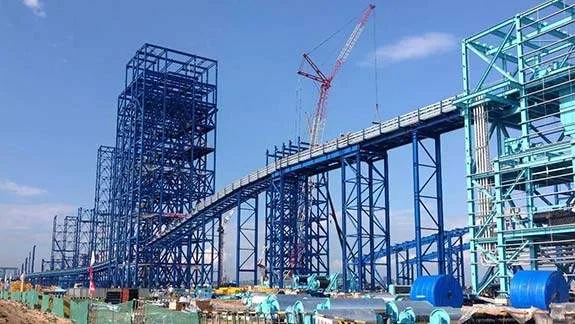
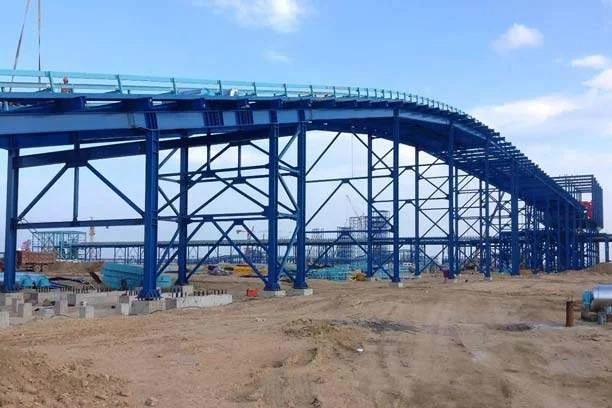
Steel truss structures find applications in various sectors due to their strength, versatility, and adaptability. Below are some common uses:
Bridges
Steel trusses are a popular choice for bridge construction because they can support heavy loads while spanning long distances.
Industrial Buildings
Steel trusses provide excellent support for large-scale industrial structures, such as warehouses, factories, and hangars.
Roofing Systems
Steel trusses are widely used in roofing due to their ability to handle both horizontal and vertical loads efficiently.
Stadiums and Arenas
The lightweight yet strong nature of steel trusses makes them ideal for creating expansive, open spaces in sports facilities.
Towers
Telecommunication and power transmission towers often rely on steel truss structures for their height and stability.
Benefits of Steel Truss Structures
Steel trusses offer several advantages, making them a preferred choice in construction:
Structural Efficiency
Their triangular design ensures optimal load distribution, enhancing structural stability.
Versatility
Steel trusses can be customized to suit various applications, from small residential projects to large-scale industrial complexes.
Rapid Installation
Pre-fabricated truss components allow for quick assembly, reducing construction time and labor costs.
Minimal Maintenance
Steel trusses require less maintenance compared to other materials, lowering long-term operational costs.
Resilience
Steel trusses withstand extreme conditions, such as heavy winds, earthquakes, and temperature fluctuations, ensuring safety and durability.
Comparison Table: Steel Truss Types and Applications
| Type of Steel Truss | Key Features | Common Applications |
|---|---|---|
| Pratt Truss | Diagonals sloping toward the center | Heavy load-bearing structures |
| Warren Truss | Equilateral triangles | Bridges, roofing |
| Howe Truss | Outward-sloping diagonals | Railway bridges, large-span roofs |
| Fink Truss | Economical material use | Residential roofing |
| K Truss | Enhanced stability | High-stress structures |
Designing Steel Truss Structures

The design of steel truss structures involves several considerations to ensure optimal performance. Below are the primary factors:
Load Analysis
Understanding the types and magnitudes of loads the structure will bear is crucial for determining the truss design.
Material Selection
Choose high-quality steel with appropriate tensile strength and corrosion resistance for maximum durability.
Span and Geometry
The span of the truss and its geometric arrangement must align with the project’s requirements for stability and aesthetics.
Environmental Conditions
Consider environmental factors, such as wind, snow, and seismic activity, when designing the truss.
Fabrication and Installation
Ensure that the trusses are manufactured to precise specifications and installed correctly to avoid structural issues.
Conclusion
Steel truss structures are a testament to the ingenuity of modern engineering. Their ability to combine strength, flexibility, and cost-effectiveness makes them an indispensable element in construction projects worldwide. By understanding their features, types, and applications, you can make informed decisions when selecting trusses for your project.
Investing in steel truss structures ensures durability, safety, and efficiency, making them a sustainable choice for the future of construction.
FAQ
What makes steel trusses stronger than other materials?
Steel’s high tensile strength and the triangular configuration of trusses ensure optimal load distribution, making them exceptionally strong.
Can steel trusses be used in residential construction?
Yes, steel trusses are commonly used in residential construction, especially for roofing, due to their durability and cost-effectiveness.
Are steel trusses environmentally friendly?
Steel is 100% recyclable, making steel trusses an environmentally sustainable option for construction projects.
How long do steel truss structures last?
With proper maintenance, steel truss structures can last for decades, often exceeding 50 years in many applications.
Do steel trusses require special maintenance?
Steel trusses require minimal maintenance. Regular inspections and occasional anti-corrosion treatments are typically sufficient.
Can steel trusses withstand extreme weather conditions?
Yes, steel trusses are designed to resist extreme weather conditions, such as heavy winds, snow loads, and seismic forces.
How are steel trusses fabricated?
Steel trusses are fabricated in controlled environments using advanced welding and cutting techniques to ensure precision and quality.