Welcome to My Blog!
Before we dive into the content, I’d love for you to join me on my social media platforms where I share more insights, engage with the community, and post updates. Here’s how you can connect with me:
Facebook:https://www.facebook.com/profile.php?id=61565337355573
Now, let’s get started on our journey together. I hope you find the content here insightful, engaging, and valuable.
Table of Contents
Introduction
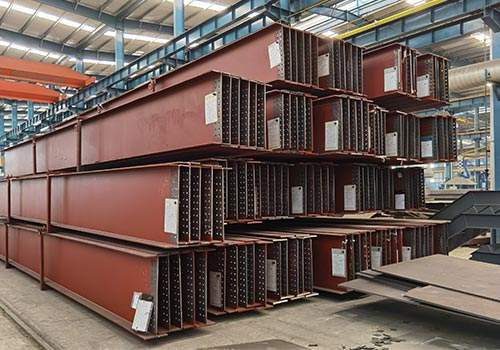
When it comes to structural construction, the choice of beams plays a critical role in ensuring the stability, strength, and durability of the structure. Among various types of beams used in construction, the steel H beam is one of the most widely preferred options. But how does it compare to other types of structural beams, such as I beams, box beams, and T beams? This article will delve into the advantages and disadvantages of steel H beams compared to other structural beams to help you make an informed decision for your project.
What is a Steel H Beam?
Before we compare steel H beams to other types of structural beams, it’s essential to understand what a H beam is. A H beam, often referred to as an H-section or I-beam, is a structural steel element shaped like the letter “H”. Its two horizontal flanges (top and bottom) and a vertical web provide excellent strength and resistance to bending, making it a crucial component in construction.
Key Features of H Beams
- Shape and Design: The distinct H-shape provides superior strength and load-bearing capacity.
- Material: Typically made of carbon steel, stainless steel, or alloy steel, these beams are designed to withstand immense pressure and heavy loads.
- Applications: Used in various industries including construction, infrastructure, and industrial applications, particularly in large-scale buildings and bridges.
Steel H Beam vs. I Beam: Which is More Durable?
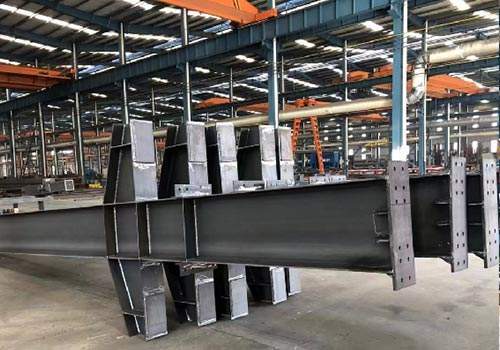
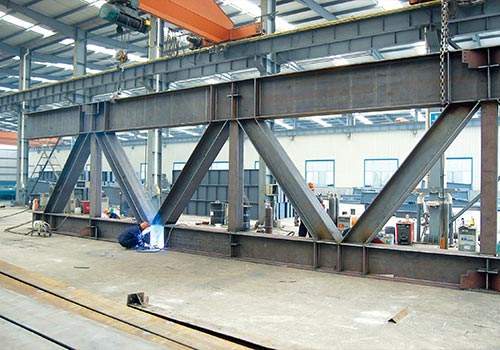
When comparing H beams with I beams, one of the primary factors to consider is their durability and load distribution. Both types are commonly used in construction, but they have distinct features that make them suitable for different applications.
Strength and Load Distribution
- H Beam: The H beam has better load distribution across its wider flanges. This design is ideal for supporting heavy loads across a broad span.
- I Beam: While I beams also offer significant strength, they typically perform better when used in scenarios where the load is concentrated along a single axis.
Flexibility and Versatility
- H Beam: The H beam is highly versatile and can be used in a variety of structural applications, including both horizontal and vertical support.
- I Beam: The I beam, while strong, is generally more limited in versatility than the H beam, particularly for projects requiring wider spans or varying load types.
H Beam vs. Box Beam: A Comparison of Strength and Durability
Another common comparison is between H beams and box beams. Both of these beams are strong and widely used in construction, but they offer different advantages depending on the structure’s requirements.
Weight and Structural Integrity
- Steel H Beam: The H beam is typically lighter than the box beam, which can be beneficial for reducing overall weight in some applications.
- Box Beam: The box beam, while heavier, provides greater resistance to torsion and twisting. This makes it an excellent choice for structures subject to rotational forces.
Use in Different Applications
- H Beam: H beams are ideal for large-scale construction projects, where weight savings and load-bearing are crucial.
- Box Beam: Box beams are better suited for projects requiring more resistance to twisting forces, such as crane structures or platforms.
Steel H Beam vs. T Beam: Understanding the Differences
T beams are another common structural element, and they differ significantly from H beams in their design and functionality.
Load-Bearing Capacity
- Steel H Beam: With its wider flanges and thicker web, the H beam generally offers a higher load-bearing capacity compared to the T beam.
- T Beam: While T beams can bear loads, they are often used for specific applications such as concrete slabs and bridge decks, where their shape fits well.
Design and Application
- Steel H Beam: The H beam is highly versatile and widely used in both vertical and horizontal applications.
- T Beam: The T beam’s design is more specialized for certain structural configurations, and it is often employed in the construction of floors, decks, and slabs.
Steel H Beam Properties: Why It’s the Preferred Choice
The H beam is preferred for many large-scale construction projects due to its excellent strength-to-weight ratio, ease of installation, and durability. Below are some properties that make it an ideal choice for various applications.
- High Load-Bearing Capacity: The H beam can bear substantial weight, making it ideal for large buildings and bridges.
- Cost-Effective: Despite its strength and durability, H beams are relatively affordable, making them a cost-effective choice for many construction projects.
- Versatility: Steel H beams can be used in a variety of applications, from supporting large buildings to bridges and infrastructure projects.
H Beams in Large-Scale Construction
Steel H beams are often the go-to choice in large-scale construction projects because of their ability to handle heavy loads and span large distances. Their design ensures minimal bending and distortion, allowing for greater structural integrity and safety.
Common Applications
- Buildings: H beams are used in the construction of skyscrapers and other large buildings.
- Bridges: The beams’ strong load-bearing capabilities make them ideal for bridge construction, where support is essential for maintaining structural stability.
- Industrial Applications: H beams are commonly found in warehouses, factories, and other industrial buildings due to their durability and load distribution properties.
Table: Comparison of Steel H Beam and Other Structural Beams
| Property | Steel H Beam | I Beam | Box Beam | T Beam |
|---|---|---|---|---|
| Shape | H-shaped | I-shaped | Box-shaped | T-shaped |
| Load-Bearing Capacity | High | Moderate | High (Resistant to torsion) | Moderate |
| Weight | Light | Light to moderate | Heavy | Moderate |
| Common Use | Large buildings, bridges | Medium spans | Cranes, platforms | Concrete slabs |
| Resistance to Twisting | Moderate | Low | High | Low |
| Versatility | High | Moderate | Low | Moderate |
Steel H Beams in Structural Integrity: The Best Choice for Safety
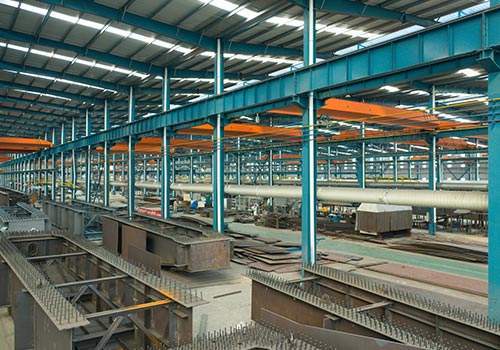
For construction projects where safety and durability are paramount, H beams are often the best option. Their robust design ensures that they can withstand significant pressure, making them ideal for buildings that require long spans and support for heavy loads. Additionally, H beams are easy to install and maintain, ensuring a long lifespan for any structure.
Conclusion
After comparing steel H beams to other structural beams such as I beams, box beams, and T beams, it’s clear that H beams offer a unique blend of strength, versatility, and cost-effectiveness. They are ideal for large-scale construction projects that require support for heavy loads over wide spans.
If you’re looking to make an informed decision for your construction project, consider choosing steel H beams for their superior load-bearing capabilities and structural integrity.
Ready to upgrade your construction materials? Contact us today for the best deals on steel H beams and start building with strength and reliability!
FAQ
What are the main advantages of using steel H beams over other structural beams?
Steel H beams are preferred for their high load-bearing capacity, versatility, and cost-effectiveness. They provide better load distribution and can handle heavier loads over larger spans compared to other beams.
Can H beams be used in small construction projects?
While H beams are typically used in larger construction projects, they can also be used in smaller applications, especially when high strength and durability are required.
How does the cost of steel H beams compare to other beams?
Steel H beams are generally more affordable than box beams and T beams while offering comparable or superior strength. They provide excellent value for their cost.