A prefabricated steel warehouse is no longer just a simple storage building. For manufacturers, logistics companies, industrial parks, and export-oriented businesses, it has become a strategic asset that affects storage capacity, workflow efficiency, construction speed, maintenance planning, and future expansion. When designed correctly, a steel warehouse can support daily operations for many years while giving owners the flexibility to adjust space as business needs change.
The real challenge is not only choosing steel as a building material. The real challenge is knowing how to plan the warehouse structure, span, height, loading zones, wall and roof system, ventilation, insulation, coating, and installation sequence before production begins. This guide explains how to approach a prefabricated steel warehouse from a practical buyer’s perspective, so you can avoid common mistakes and build a facility that works well from the first day of operation.
Table of Contents
Why a Prefabricated Steel Warehouse Fits Modern Industrial Needs
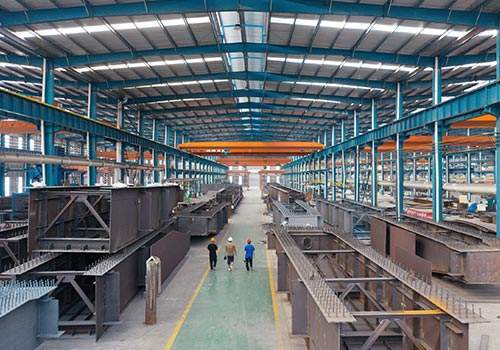
Warehouse demand has changed. Businesses now need buildings that can handle fast inventory turnover, wider vehicle access, taller storage systems, larger equipment, and flexible interior layouts. A traditional warehouse may meet basic storage needs, but it often limits future adjustments.
A prefabricated steel warehouse is built from factory-made steel components that are transported to the site and assembled according to engineered drawings. This method helps improve dimensional accuracy, reduce on-site work, and make the construction process more predictable. For buyers who need a warehouse for logistics, manufacturing support, raw material storage, finished goods storage, or industrial processing, prefabricated steel construction offers several practical advantages.
The most important advantage is usable space. Steel frames can support wide spans and high ceilings, which helps create open interiors for pallet racks, forklifts, production lines, loading areas, and future layout changes. If your project needs strong main frames, roof support, or structural members, you can review related steel structure products during the planning stage.
What Makes a Warehouse “Prefabricated”?
A prefabricated warehouse is not a temporary shed. It is a planned building system where major components are manufactured before arriving at the construction site. These components usually include columns, beams, roof trusses, purlins, bracing systems, roof panels, wall panels, connection plates, bolts, and other accessories.
According to the general definition of prefabricated building, the core idea is that building parts are made in advance and then assembled on site. In steel warehouse projects, this approach is especially useful because steel members can be cut, welded, drilled, coated, marked, and checked in a controlled factory environment.
A good prefabricated steel warehouse normally includes:
| Building Part | Main Function | Why It Matters |
|---|---|---|
| Steel columns | Transfer vertical loads to the foundation | Determines overall stability and load path |
| Steel beams | Support roof and frame loads | Affects span, roof design, and usable space |
| Roof trusses | Create long-span roof support | Useful for wide warehouse layouts |
| Bracing system | Improves lateral stability | Helps resist wind and structural movement |
| Purlins and girts | Support roof and wall panels | Important for cladding installation |
| Roof and wall panels | Enclose and protect the building | Affects insulation, weather resistance, and appearance |
| Bolts and connectors | Join steel members together | Influences installation accuracy and safety |
| Coating system | Protects steel from corrosion | Important for long-term durability |
This system-based approach is one reason prefabricated steel warehouses are widely used in logistics centers, factories, industrial storage buildings, agricultural facilities, and export warehouses.
Start With Operations, Not Just Building Size
Many buyers begin by asking, “How many square meters do I need?” That question is important, but it is not enough. A better starting point is: “What will happen inside the warehouse every day?”
Before confirming the warehouse design, define the operational flow clearly. For example, a warehouse used for finished goods storage may need wide clear spans, efficient loading docks, and moisture control. A warehouse used for manufacturing support may need equipment zones, crane planning, ventilation, and stronger floor coordination. A cold storage or insulated warehouse may need a different wall and roof panel system.
Ask these questions before design:
| Planning Question | Why It Should Be Answered Early |
| What products will be stored? | Determines space, load, humidity, and fire planning |
| Will forklifts or trucks enter the building? | Affects door size, aisle width, and floor planning |
| Is racking required? | Impacts clear height and column spacing |
| Will the warehouse expand later? | Influences frame direction and reserved connection points |
| Does the site have strong wind, rain, humidity, or corrosion exposure? | Affects structural design and coating selection |
| Will workers stay inside for long periods? | Influences ventilation, daylighting, and insulation |
| Are there loading docks or canopy areas? | Affects frame layout and traffic flow |
A prefabricated steel warehouse should be designed around workflow, not only around dimensions. This helps the building support business performance instead of becoming a fixed shell that limits future growth.
Choosing the Right Structural System
The structural system is the backbone of the warehouse. For most industrial warehouse buildings, the main structure includes steel columns and steel beams. These members carry the load of the roof, wall system, wind force, and other design requirements.
For simple storage warehouses, a portal frame structure is often practical because it provides open space and efficient installation. For larger industrial buildings, heavier columns, truss beams, or special structural members may be needed. If the warehouse includes long spans, overhead equipment, heavy roof loads, or special architectural requirements, the structural system should be reviewed carefully by an experienced engineering team.
Common structural choices include:
| Structural Option | Suitable Application | Key Benefit |
| Portal frame | Standard warehouse and workshop | Efficient layout and fast installation |
| H-beam frame | Industrial buildings with strong load needs | Good strength and stable performance |
| Truss roof system | Large-span warehouse or special roof design | Reduces need for interior columns |
| Box column structure | Heavy-duty industrial buildings | Strong load-bearing capacity |
| Braced frame | Wind or lateral stability control | Improves structural resistance |
For projects that require strong frame members, H Beam is often used because it offers a practical balance between strength, bending resistance, and structural efficiency. For large-span designs, Truss Beam can help create wider interior spaces and improve roof support.
Span, Height, and Column Spacing: The Three Decisions That Shape Warehouse Efficiency
Three design decisions will have a major impact on how well a prefabricated steel warehouse performs: span, height, and column spacing.
Span affects interior openness. A larger span gives more usable floor area without interior columns, which is valuable for logistics, vehicle movement, and flexible rack layout. However, a very large span may require stronger steel members and more careful engineering.
Height affects storage capacity. A taller warehouse can support higher racking systems, better ventilation, and more flexible equipment use. But height also affects wind load, wall panel design, foundation coordination, and installation planning.
Column spacing affects workflow. Poor column placement can block forklift routes, reduce rack efficiency, and create awkward dead zones. Good column planning can make the building easier to use every day.
A practical design process should compare at least two or three layout options before finalizing the structure. The cheapest-looking option on paper may not be the most efficient option in operation. A slightly better layout can improve storage density, reduce internal traffic conflict, and support future expansion more easily.
Roof and Wall Systems Should Match the Warehouse Environment
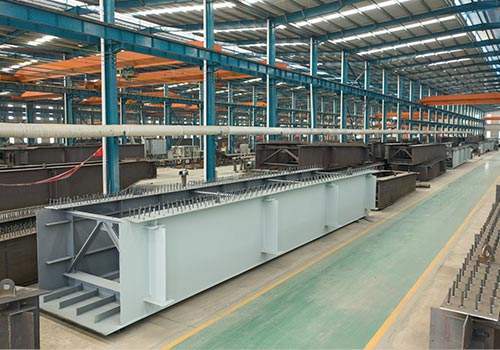
The roof and wall system is not only about appearance. It affects waterproofing, insulation, indoor temperature, noise, durability, and maintenance.
For standard warehouses, color steel panels may be enough. For temperature-sensitive storage, insulated sandwich panels may be more suitable. For buildings in humid, rainy, or coastal areas, roof slope, flashing design, drainage, and coating selection become more important.
Common enclosure options include:
| Panel System | Best For | Main Consideration |
| Single color steel sheet | Basic industrial storage | Lightweight and simple installation |
| Color steel sandwich panel | Warehouses needing insulation | Better thermal and sound performance |
| Polyurethane panel | Cold storage or temperature control | Strong insulation performance |
| Rock wool panel | Fire-resistance-focused buildings | Good fire and sound performance |
| Polycarbonate daylighting sheet | Natural lighting zones | Must be planned with heat and waterproofing |
If the warehouse is located in a tropical or high-rainfall region, roof drainage should be planned early. Large roof areas collect significant rainwater, so gutter size, downpipe position, roof slope, and drainage direction must match local conditions. Poor drainage can cause leaks, corrosion, and long-term maintenance problems.
Coating and Corrosion Protection Are Long-Term Value Decisions
A prefabricated steel warehouse may look strong after installation, but its long-term performance depends heavily on corrosion protection. This is especially important for warehouses near coastal areas, chemical plants, ports, wet climates, or industrial zones.
Common protection methods include paint systems, galvanizing, primer plus finish coating, and project-specific anti-corrosion treatment. The right choice depends on the environment, expected service life, and maintenance plan.
Buyers should not treat coating as a small detail. Coating quality affects future repair frequency, appearance, safety, and lifecycle value. A good supplier should be able to explain surface preparation, coating thickness, coating type, inspection process, and packaging protection before shipping.
Steel is also widely discussed in sustainability because it can be reused and recycled. The World Steel Association notes that steel products should be designed for durability, reuse, remanufacturing, and recycling. For warehouse owners, this means good design and material planning can support both long-term performance and resource efficiency.
Safety, Codes, and Engineering Review Cannot Be Ignored
Every prefabricated steel warehouse should be designed according to local building codes and project-specific loads. These loads may include dead load, live load, wind load, seismic requirements, roof load, crane load, equipment load, and environmental exposure.
Engineering review should cover:
| Review Area | What to Check |
| Structural load calculation | Wind, seismic, roof, equipment, and usage loads |
| Connection design | Bolts, welding, plates, and node details |
| Foundation coordination | Anchor bolts, base plates, and column positioning |
| Fire planning | Local code requirements and material selection |
| Erection safety | Lifting sequence, temporary bracing, and fall protection |
| Quality inspection | Material certificates, weld inspection, and dimensional checks |
For technical reference, the AISC Specification for Structural Steel Buildings provides widely recognized requirements for structural steel building design and construction. For installation safety, OSHA steel erection standards explain safety requirements related to steel erection activities.
Even when the project is outside the United States, these resources are useful as reference points because they show the kind of engineering discipline and safety thinking that should exist in any serious steel structure project.
How Factory Fabrication Improves Project Predictability
One major benefit of a prefabricated steel warehouse is that many quality-control steps happen before the steel arrives at the site. Factory fabrication allows steel members to be processed, drilled, welded, marked, and coated according to drawings.
This helps reduce on-site uncertainty. When components are manufactured accurately, the installation team can identify members more easily, align holes more efficiently, and assemble the building with fewer adjustments. This is especially important for export projects, where missing parts, wrong hole positions, unclear labels, or poor packaging can cause costly delays.
A reliable fabrication process should include:
| Factory Step | Quality Purpose |
| Material checking | Confirms steel grade and specification |
| Cutting and drilling | Improves installation accuracy |
| Welding control | Ensures joint strength and consistency |
| Trial assembly when needed | Reduces mismatch risk |
| Surface treatment | Improves coating adhesion |
| Marking and numbering | Helps fast on-site assembly |
| Packaging and loading | Protects parts during transport |
For international buyers, it is also useful to review factory capacity, equipment, previous projects, and export experience. Guanglei’s project background includes steel structure work for industrial and overseas projects, and buyers can review related foreign cases for project reference.
Installation Planning: Where Many Projects Lose Time
Even a well-designed steel warehouse can face delays if installation planning is weak. Site conditions, crane access, foundation readiness, weather, labor coordination, and material storage all affect the final schedule.
Before delivery, the project team should confirm:
| Installation Item | Key Requirement |
| Foundation completion | Anchor bolts must match drawings |
| Site access | Trucks and cranes need clear movement paths |
| Material unloading area | Components should be stored safely and logically |
| Lifting plan | Large members need correct crane capacity |
| Temporary bracing | Stability is needed during erection |
| Weather planning | Wind and rain can affect lifting safety |
| Panel installation sequence | Roof and wall work should follow frame alignment |
| Final inspection | Bolts, panels, drainage, and doors must be checked |
A practical installation sequence usually starts with foundation inspection, column erection, beam installation, bracing, purlins, roof panels, wall panels, doors, accessories, drainage, and final checking. Clear communication between factory, logistics team, and installation team reduces mistakes and keeps the project moving smoothly.
Designing for Future Expansion

Many warehouses are built for current demand, but the best ones are planned for future growth. If your business may expand in three to five years, the warehouse should not be designed as a dead-end structure.
Future expansion can affect:
| Expansion Factor | Design Impact |
| Building length | Frame layout should allow extension |
| Side expansion | Wall system and column planning must support changes |
| Additional doors | Traffic flow and wall panels should be considered |
| Higher storage needs | Clear height and roof structure matter |
| Extra production zones | Utilities and equipment layout should be reserved |
| Loading docks | Truck circulation and site planning must leave space |
Planning expansion early is usually easier than modifying a completed warehouse later. Even if expansion is not built immediately, reserved structural logic can save time and reduce disruption when the business grows.
Avoid These Common Buyer Mistakes
A prefabricated steel warehouse is a major project, so buyers should avoid decisions based only on short-term convenience.
Common mistakes include:
| Mistake | Possible Result |
| Choosing a supplier only by low quotation | Weak design, poor material control, or hidden risks |
| Ignoring local climate | Leakage, corrosion, or poor indoor comfort |
| Not confirming load requirements | Unsafe or inefficient structure |
| Poor column spacing planning | Reduced storage efficiency |
| No coating specification | Shorter service life and higher maintenance |
| No installation coordination | Delays and site errors |
| No future expansion plan | Higher cost and disruption later |
| Weak drawing review | Fabrication or assembly problems |
A better approach is to treat the warehouse as an operational system. The building should be evaluated by structure, enclosure, workflow, maintenance, safety, and future use—not just by steel tonnage.
Example: Planning a Warehouse for Finished Goods and Logistics

Imagine a company needs a prefabricated steel warehouse for finished goods storage and outbound logistics. The warehouse must support pallet racks, forklift movement, truck loading, moisture protection, and future expansion.
A practical plan may include:
| Requirement | Recommended Planning Direction |
| Finished goods storage | Wide-span steel frame with efficient rack layout |
| Forklift traffic | Clear aisles and suitable door positions |
| Truck loading | Canopy or loading zone near outbound area |
| Moisture protection | Proper roof slope, wall panel sealing, and drainage |
| Future growth | Reserve extension direction at one end |
| Worker comfort | Ventilation and daylighting design |
| Long service life | Suitable coating and maintenance access |
In this scenario, the warehouse is not just a building shell. It becomes a logistics tool. The value comes from smoother goods movement, safer storage, faster installation, and the ability to expand without redesigning the entire facility.
For companies preparing a warehouse, workshop, logistics center, or industrial building, it is worth discussing the layout and structural requirements early with a steel structure manufacturer. You can contact Guanglei Steel Structure to share your project drawings, site conditions, span requirements, and expected application.
FAQ
What is the main advantage of a prefabricated steel warehouse?
The main advantage is that major steel components are manufactured in a factory and then assembled on site. This improves accuracy, shortens on-site work, and makes the construction process easier to control.
Is a prefabricated steel warehouse suitable for large-span storage?
Yes. Steel structures are well suited for wide spans and open interiors, which are useful for pallet racks, forklifts, production lines, logistics movement, and flexible warehouse layouts.
What information should I prepare before requesting a warehouse design?
You should prepare the building size, site location, usage, local weather conditions, required clear height, door positions, loading needs, insulation requirements, and whether future expansion is planned.
Which steel members are commonly used in warehouse buildings?
Common members include steel columns, H beams, roof beams, truss beams, purlins, bracing systems, base plates, bolts, and roof or wall panel supports.
How can I improve the service life of a steel warehouse?
Choose suitable steel specifications, proper coating, good drainage, reliable roof and wall sealing, regular inspection, and corrosion protection that matches the local environment.
Can a prefabricated steel warehouse be expanded later?
Yes, but expansion should be considered during the original design. Frame direction, column spacing, wall panel layout, and reserved connection points should be planned before fabrication.
Conclusion
A prefabricated steel warehouse is a smart choice for businesses that need efficient space, strong structural performance, fast installation, and long-term flexibility. However, the success of the project depends on much more than choosing steel. Buyers need to plan the warehouse around real operations, including storage flow, span, height, column spacing, coating, roof and wall systems, safety requirements, installation conditions, and future expansion.
The best warehouse is not necessarily the largest or the most complex. It is the one that supports your daily workflow, protects your goods, adapts to future growth, and remains reliable over time. By working with an experienced steel structure partner and reviewing the design carefully before production, project owners can build a prefabricated steel warehouse that delivers practical value from construction to long-term operation.
If you are planning a new warehouse, logistics center, workshop, or industrial building, explore Guanglei’s steel structure products or send your project requirements for technical support.