Welcome to My Blog!
Before we dive into the content, I’d love for you to join me on my social media platforms where I share more insights, engage with the community, and post updates. Here’s how you can connect with me:
Facebook:https://www.facebook.com/profile.php?id=61565337355573
Now, let’s get started on our journey together. I hope you find the content here insightful, engaging, and valuable.
Table of Contents
Introduction
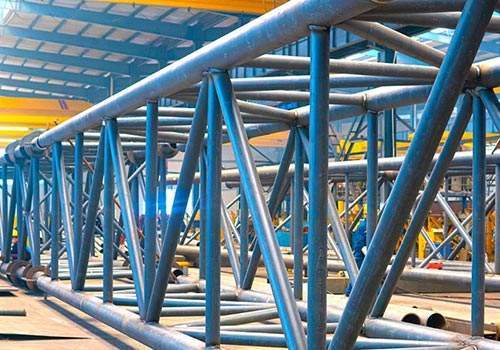
The girder truss beam stands as a testament to engineering ingenuity, offering a cost-effective solution for spanning large distances. Its unique design, combining the strength of a girder with the efficiency of a truss, makes it a favored choice in numerous construction projects. Understanding the intricacies of a girder truss beam, from its design principles to its practical applications, is essential for any construction professional seeking optimal structural solutions. This guide aims to provide a comprehensive overview of girder truss beam technology, focusing on its cost-effectiveness and structural advantages. The versatility of this structural element allows for customized designs that meet specific project requirements, further emphasizing its importance in modern construction. These beams are instrumental in projects where long spans and minimal support are required.
The Structural Mechanics of a Truss Beam
A girder truss beam leverages the principles of both girder and truss systems. The girder provides the primary bending resistance, while the truss elements distribute the load, minimizing stress on the girder. This synergy results in a structure that is both strong and lightweight. The structural mechanics of a truss beam are complex, involving intricate calculations to ensure load distribution and structural integrity. Understanding these mechanics is vital for designing and implementing effective truss beam systems. Finite element analysis (FEA) is often employed to model and predict the behavior of these beams under various loading conditions. The careful analysis of stress and strain ensures the longevity and safety of the constructed structure.
Cost-Effectiveness of Girder Truss Beam in Construction
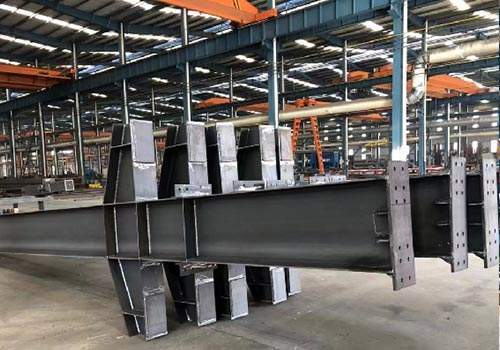
One of the most compelling advantages of a truss beam is its cost-effectiveness. By optimizing material usage and reducing the overall weight of the structure, significant cost savings can be achieved. This cost-effectiveness extends beyond material costs, also impacting transportation and installation expenses. Girder truss beam designs can be tailored to specific project requirements, further enhancing their economic viability. The reduced weight of these structures also leads to lower foundation costs, which contributes to overall project savings. This efficiency is particularly valuable in large-scale projects where material and labor costs can quickly escalate.
Applications of Girder Truss Beam in Modern Infrastructure
The versatility of the girder truss beam makes it suitable for a wide range of applications in modern infrastructure. From bridges and stadiums to industrial buildings and airports, the truss beam provides a reliable and efficient structural solution. These applications highlight the adaptability and robustness of truss beam technology in various construction contexts. In bridge construction, these beams allow for longer spans over rivers and valleys, reducing the need for intermediate supports. In stadium design, they enable the creation of large, open spaces without obstructing views.
Design Considerations for Girder Truss Beam Systems
Designing a truss beam system requires careful consideration of several factors, including load capacity, span length, and environmental conditions. Proper design ensures the structural integrity and longevity of the beam. Factors such as material selection, connection details, and fabrication techniques also play a crucial role in the design process. The design phase must also account for potential dynamic loads, such as wind and seismic activity, to ensure structural stability. Detailed engineering drawings and specifications are essential for accurate fabrication and assembly.
Material Selection for Optimal Girder Truss Beam Performance
The choice of materials significantly impacts the performance and cost-effectiveness of a girder truss beam. Steel is commonly used due to its high strength-to-weight ratio, but other materials like aluminum and composite materials may be considered for specific applications. Selecting the right material ensures optimal performance and durability. The selection process should also consider the material’s resistance to corrosion and environmental degradation. Modern high-strength steels and advanced composites offer enhanced performance and longevity.
Fabrication Techniques for Girder Truss Beam Construction
Fabrication techniques play a critical role in the construction of girder truss beams. Modern fabrication methods, such as welding and bolting, ensure precise assembly and structural integrity. Advanced fabrication techniques allow for the creation of complex truss beam designs, enhancing their applicability in diverse construction projects. Computer-aided manufacturing (CAM) and robotic welding are increasingly used to improve accuracy and efficiency. Quality control during fabrication is crucial to ensure the structural integrity of the final product.
Installation and Maintenance of Girder Truss Beam Structures
Proper installation and maintenance are essential for ensuring the long-term performance of girder truss beam structures. Installation involves careful planning and execution to ensure accurate placement and alignment, often using cranes and specialized equipment. Regular maintenance, including inspections and repairs, helps prolong the lifespan of the beam and prevent structural issues. Non-destructive testing methods, such as ultrasonic and radiographic inspection, are used to assess the condition of the beam without causing damage. Implementing a proactive maintenance plan can significantly extend the service life of these structures.
Girder truss beam specifications and example values.
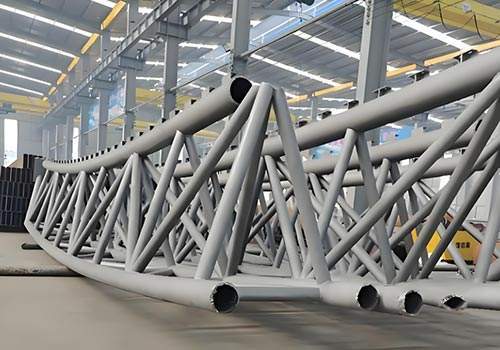
Here is a table demonstrating some example specifications for truss beams, and example values.
| Specification | Example Value | Notes |
|---|---|---|
| Span Length | 30-100 meters | Varies based on application |
| Load Capacity | 50-500 tons | Depends on design and materials |
| Material | Structural Steel (A36, A572) | Common, but aluminum or composites possible |
| Truss Configuration | Warren, Pratt, Howe | Choice affects load distribution |
| Girder Depth | 1-5 meters | Determined by span and load |
| Truss Member Size | Varies | Calculated based on stress analysis |
| Connection Type | Welded, Bolted | Affects fabrication and installation |
| Deflection Limit | Span/360 | Ensures structural integrity |
Conclusion
The girder truss beam offers a compelling combination of strength, efficiency, and cost-effectiveness, making it a valuable asset in modern construction. Its ability to span large distances while minimizing material usage provides significant economic and structural advantages. Understanding the principles and applications of girder truss beam technology empowers construction professionals to make informed decisions and optimize project outcomes. For high quality girder truss beam solutions, and professional consultation, contact us today to discuss your project needs and find the perfect structural solution. Contact us today for a consultation and discover how our expertise can bring your project to life.
FAQ
What is a girder truss beam?
A girder truss beam is a structural component that combines the characteristics of a girder and a truss, providing a strong and efficient solution for spanning large distances. This hybrid design allows for optimal load distribution and reduced material usage compared to traditional beams.
What are the advantages of using a truss beam?
The advantages include cost-effectiveness, high strength-to-weight ratio, and versatility in various applications. These beams are particularly advantageous in projects requiring long spans and high load capacities.
What materials are commonly used for girder truss beams?
Structural steel is the most common material, but aluminum and composite materials may also be used. The choice of material depends on the specific project requirements and environmental conditions.