Welcome to My Blog!
Before we dive into the content, I’d love for you to join me on my social media platforms where I share more insights, engage with the community, and post updates. Here’s how you can connect with me:
Facebook:https://www.facebook.com/profile.php?id=61565337355573
Now, let’s get started on our journey together. I hope you find the content here insightful, engaging, and valuable.
Table of Contents
Introduction
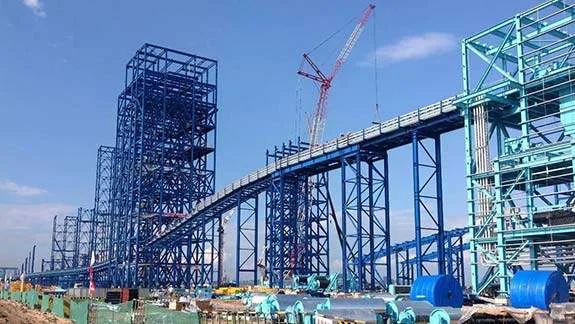
Pipe trusses are widely used in industrial projects due to their structural efficiency, versatility, and aesthetic appeal. A pipe truss is a framework made from tubular steel or aluminum sections, often configured in a triangular or latticed pattern to ensure stability and strength. This design is favored in industrial applications for its ability to handle heavy loads while using minimal material, making it both cost-effective and durable.
In this blog, we’ll explore the common uses of pipe trusses in industrial projects, their advantages, construction methods, and key considerations for choosing the right type of pipe truss. By understanding their role in various industries, you can determine how pipe trusses can benefit your project.
What is a Pipe Truss?


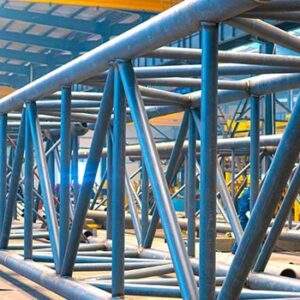
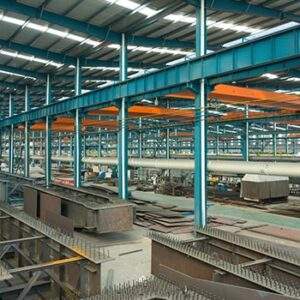
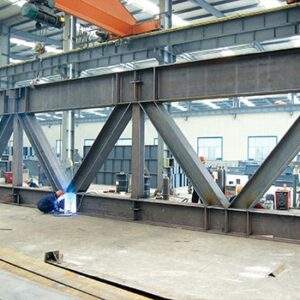
Definition and Design
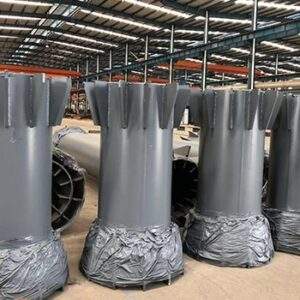
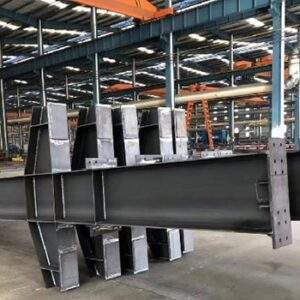
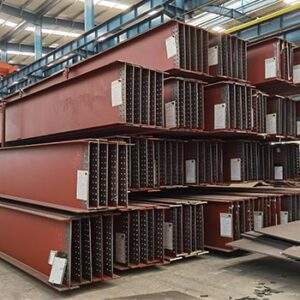
A pipe truss is a structural framework composed of interconnected tubular members. These members are joined at their ends to form a stable structure capable of withstanding significant loads. The pipe truss’s hollow section reduces weight without compromising strength, making it ideal for applications requiring lightweight yet robust structures.
Why Pipe Trusses are Preferred in Industrial Projects
Pipe trusses are preferred in industrial settings for several reasons:
- High Strength-to-Weight Ratio: Their tubular design ensures maximum strength with minimal weight.
- Aesthetic Versatility: Pipe trusses offer clean lines and modern aesthetics, ideal for industrial and commercial spaces.
- Durability: Made from steel or aluminum, pipe trusses resist corrosion and can endure harsh environments.
- Ease of Fabrication: Tubular sections are easy to weld, cut, and customize for specific project requirements.
Common Uses of Pipe Truss in Industrial Projects

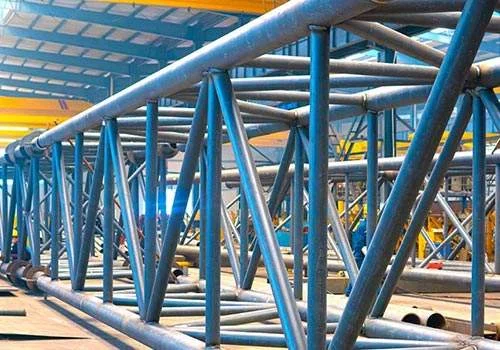
Roof Structures
Pipe trusses are extensively used in industrial roofing systems. They support large-span roofs for factories, warehouses, and storage facilities. The lightweight design reduces the overall load on the foundation while ensuring stability.
- Applications: Warehouses, workshops, and industrial plants.
- Advantages: Large spans without intermediate supports, cost efficiency, and quick installation.
Bridges and Walkways
Pipe trusses are ideal for pedestrian bridges, industrial walkways, and conveyor supports. Their strength and modular design ensure safety and reliability in high-load environments.
- Applications: Industrial facility walkways, conveyor system bridges, and pedestrian overpasses.
- Advantages: Easy to assemble, high load-bearing capacity, and corrosion resistance.
Pipe Racks and Equipment Supports
In industrial plants, pipe trusses are used as pipe racks and equipment supports for carrying piping systems, cables, and other utilities. The truss system ensures stability while minimizing material usage.
- Applications: Oil refineries, chemical plants, and power stations.
- Advantages: Flexible design for various loads, durable, and suitable for harsh environments.
Canopies and Shelters
Pipe trusses are commonly used for industrial canopies and shelters to protect equipment, vehicles, or personnel. Their modular design allows for easy assembly and disassembly, making them perfect for temporary or permanent structures.
- Applications: Fuel stations, industrial loading bays, and storage shelters.
- Advantages: Lightweight, customizable, and quick to install.
Towers and Masts
Pipe trusses are also used in communication towers, power transmission towers, and lighting masts. Their lightweight yet sturdy design ensures minimal wind resistance while providing structural stability.
- Applications: Communication towers, power line supports, and industrial lighting structures.
- Advantages: Wind-resistant, corrosion-resistant, and suitable for tall structures.
Table: Key Types of Pipe Trusses and Their Applications
| Type of Pipe Truss | Description | Common Applications |
|---|---|---|
| Pratt Truss | Diagonal members slope toward the center | Roof structures, pedestrian bridges |
| Warren Truss | Triangular design with alternating diagonals | Walkways, pipe racks, and bridges |
| Howe Truss | Diagonal members slope outward from the center | Equipment supports, industrial canopies |
| Space Frame Truss | 3D configuration for higher load distribution | Large-span roofs, towers, and masts |
| Bowstring Truss | Curved top chord for aesthetic appeal | Architectural canopies, shelters |
Benefits of Pipe Trusses in Industrial Projects

High Load Capacity
Pipe trusses can handle significant loads, making them ideal for industrial applications that require heavy equipment and materials.
Cost Efficiency
The lightweight design reduces material costs and foundation requirements. Additionally, pipe trusses are easy to fabricate, transport, and install, reducing overall project costs.
Durability and Longevity
Pipe trusses are resistant to environmental factors like corrosion, weather, and UV exposure, ensuring long-lasting performance in industrial settings.
Customization and Versatility
Pipe trusses can be tailored to suit specific project requirements, whether for large-span roofs, compact walkways, or aesthetic canopies.
Environmentally Friendly
The use of tubular steel or aluminum in pipe trusses supports sustainability by allowing recycling and reducing material waste.
Conclusion
Pipe trusses are an indispensable component of industrial projects, offering unmatched strength, durability, and versatility. From roofing systems to walkways, equipment supports, and towers, pipe trusses provide efficient solutions for a wide range of applications. Their lightweight design, cost-effectiveness, and adaptability make them a popular choice for industrial construction.
Investing in quality pipe trusses ensures that your industrial project is structurally sound, cost-efficient, and built to last. By understanding the various applications and benefits of pipe trusses, you can choose the right solution for your specific needs.
FAQ
What is a pipe truss?
A pipe truss is a structural framework made of interconnected tubular sections, designed to provide stability and support in various industrial and architectural applications.
What are the main materials used in pipe trusses?
Pipe trusses are typically made from steel or aluminum due to their high strength, durability, and corrosion resistance.
Why are pipe trusses used in industrial projects?
Pipe trusses are lightweight, strong, and versatile, making them suitable for large-span roofs, walkways, equipment supports, and more.
How are pipe trusses fabricated?
Pipe trusses are fabricated by cutting, welding, and assembling tubular sections into the desired configuration. Advanced CNC machines and welding techniques ensure precision and strength.
What are the advantages of pipe trusses over traditional beams?
Pipe trusses offer a higher strength-to-weight ratio, reduced material usage, and better aesthetic appeal compared to traditional beams.
Can pipe trusses be used in outdoor environments?
Yes, pipe trusses are highly durable and can withstand outdoor conditions, including exposure to weather, corrosion, and UV radiation.
What types of pipe trusses are commonly used?
Common types include Pratt trusses, Warren trusses, Howe trusses, space frame trusses, and bowstring trusses. Each type is suited for specific applications.
How do I choose the right type of pipe truss for my project?
Consider factors like load requirements, span length, environmental conditions, and project budget when choosing a pipe truss design.
Are pipe trusses cost-effective?
Yes, pipe trusses are cost-effective due to their lightweight design, reduced material usage, and ease of fabrication and installation.
Can pipe trusses support heavy industrial equipment?
Absolutely. Pipe trusses are designed to handle heavy loads and are often used for equipment supports, pipe racks, and other industrial applications.
How are pipe trusses maintained?
Pipe trusses require minimal maintenance. Regular inspections for corrosion, welding integrity, and structural stability are recommended to ensure long-term performance.