Malaysia’s industrial development has been moving fast in recent years, especially in logistics, manufacturing, and large-scale storage facilities. In almost every new project, one construction method appears repeatedly—building steel structure systems.
They are no longer a “new option” but a practical standard for developers who care about speed, flexibility, and long-term performance. However, while demand is growing, the real challenge has shifted elsewhere: choosing the right supplier who can actually deliver what the design requires.
This is where most project issues begin—and where this guide focuses.
Table of Contents
Understanding What a Building Steel Structure Really Means in Practice
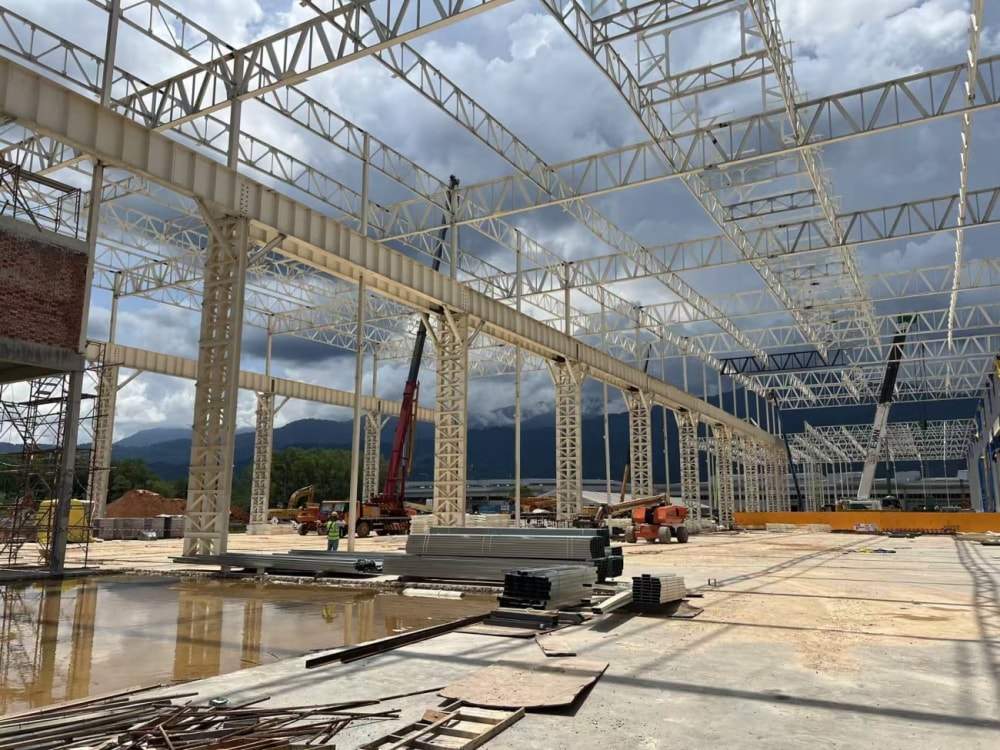
In real construction projects, a building steel structure is not just steel frames assembled together. It is a complete system where design, fabrication, and installation must work as one coordinated process.
A typical system includes:
- Primary load-bearing steel frame
- Secondary support members for roof and wall systems
- Bracing elements for lateral stability
- Connection systems (usually bolted assemblies)
- Protective coating systems for long-term durability
In Malaysia’s climate—high humidity, heavy rainfall, and strong wind conditions during seasonal changes—the performance of each component becomes even more important.
What often gets overlooked is that the structure is only as strong as the consistency between design drawings and fabrication accuracy.
Why Supplier Selection Has a Direct Impact on Project Success
Many buyers initially focus on design or material specifications, but in real projects, the supplier determines whether those specifications are actually achieved.
When the supplier is reliable:
- Structural alignment during installation is smooth
- On-site adjustments are minimal
- Project timelines remain stable
- Long-term maintenance risks are reduced
When the supplier is not reliable:
- Fabricated components may not match drawings precisely
- Installation becomes slower and more complex
- Structural performance may vary between sections
In industrial construction, even small inconsistencies can scale into serious delays.
Manufacturer vs Trading Channel: A Decision That Changes Everything
One of the most important decisions in Malaysia’s steel structure procurement is whether to work directly with a manufacturer or go through a trading channel.
Working directly with a manufacturer usually means:
- Engineering and fabrication are aligned under one system
- Technical communication is clearer
- Production adjustments are more controlled
- Material traceability is more transparent
In contrast, trading channels often introduce multiple layers between design and production. That can create gaps in technical interpretation, especially for customized industrial buildings.
For warehouse and factory projects, this difference becomes even more visible during installation.
What a Reliable Building Steel Structure Supplier Should Actually Look Like
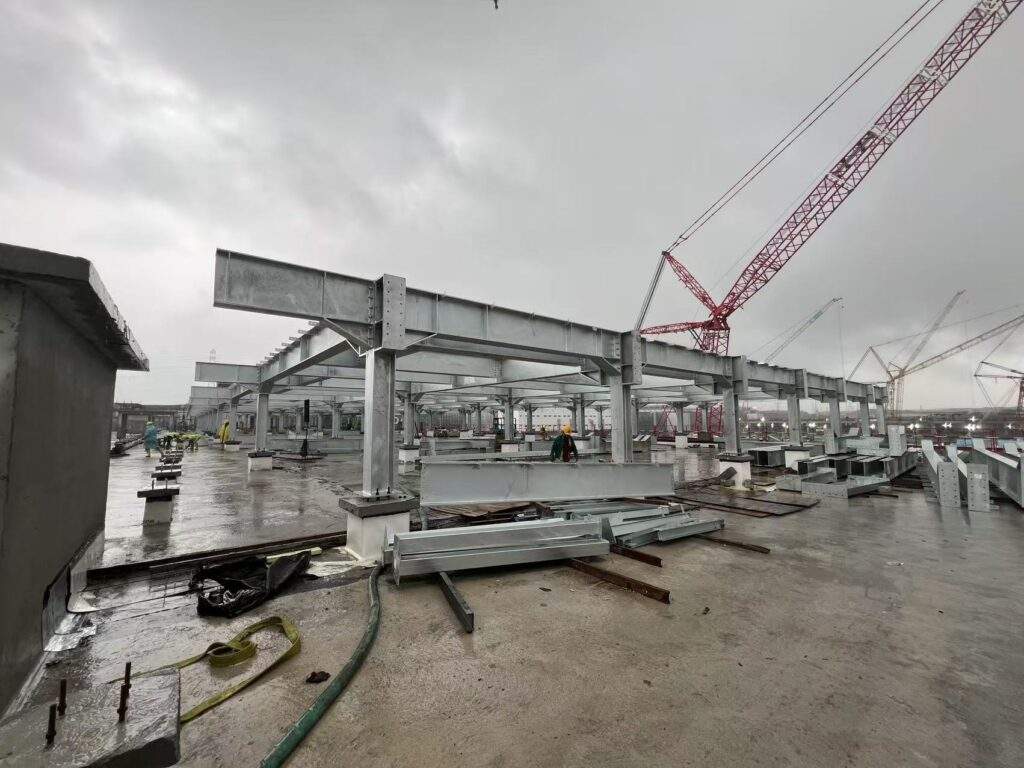
Rather than relying on promotional claims, experienced buyers usually evaluate suppliers through practical indicators.
A capable supplier typically shows strength in these areas:
Engineering capability
The ability to translate design drawings into structurally sound fabrication plans without unnecessary adjustments.
Fabrication consistency
Steel cutting, welding, and drilling must maintain stable precision across all batches—not just sample pieces.
Material control system
Consistent use of certified structural steel and protective coatings suitable for tropical environments.
Project execution experience
Experience in real industrial projects such as warehouses, workshops, and logistics buildings.
Communication and coordination
Clear engineering communication often determines whether a project runs smoothly or becomes problematic.
How Design Conditions in Malaysia Influence Structural Decisions
Steel structure design is never universal. In Malaysia, several environmental conditions directly affect engineering decisions.
Wind load behavior is one of the key considerations, especially for large-span warehouse buildings. Roof design and bracing systems must be adjusted accordingly.
High humidity also increases the importance of corrosion protection systems. This is not only about surface treatment but also about long-term material behavior.
In addition, many industrial facilities require flexible internal layouts, which means fewer internal columns and wider spans. This influences beam sizing, connection methods, and load distribution strategies.
Cost Factors That Actually Matter in Real Projects
Instead of focusing on pricing discussions, experienced developers usually analyze structural cost factors through engineering variables.
These include:
- Steel material grade selection
- Span and height requirements of the building
- Complexity of structural design
- Level of prefabrication before site delivery
- Installation conditions and site accessibility
A well-optimized design often reduces unnecessary structural weight while maintaining safety performance, which is why engineering capability matters more than initial estimates.
Where Building Steel Structure Is Most Commonly Used in Malaysia
Steel structures are now widely applied across different industrial sectors.
The most common applications include:
- Logistics and distribution warehouses
- Manufacturing and assembly plants
- Agricultural storage and processing facilities
- Industrial workshops and maintenance buildings
- Large-span commercial halls
Among these, logistics-related buildings are expanding the fastest, driven by regional supply chain growth and e-commerce infrastructure demand.
How Fabrication Quality Defines the Final Construction Outcome

In steel structure projects, fabrication quality is often more decisive than design complexity.
A typical fabrication workflow includes:
- Structural modeling and detailing
- CNC cutting and drilling
- Welding assembly under controlled conditions
- Surface treatment for corrosion protection
- Component labeling for installation sequencing
The key point is consistency. A structure built from inconsistent components will always require adjustments during installation, regardless of how good the design is.
Installation Reality: Where Good Design Either Works or Fails
On-site installation is where everything becomes visible.
A well-prepared steel structure system allows:
- Faster assembly sequence
- Stable alignment of components
- Reduced dependency on manual adjustments
A poorly prepared system usually results in:
- Rework during erection
- Misalignment between columns and beams
- Delays caused by missing or mismatched components
This is why prefabrication accuracy is becoming a major evaluation factor in supplier selection.
Evaluating a Supplier Before Committing to a Project
Before making a final decision, experienced buyers often go beyond brochures and technical sheets.
Practical evaluation steps include:
- Reviewing completed industrial project references
- Checking engineering documentation capability
- Understanding fabrication workflow transparency
- Assessing response speed during technical discussions
- Verifying production capacity consistency
A reliable supplier usually performs consistently across all these points, not just one.
Why Prefabricated Steel Structures Are Becoming the Standard Choice
Prefabrication is no longer just a construction trend—it has become a structural efficiency model.
Its advantages are clear in real projects:
- Reduced dependency on unpredictable on-site conditions
- More controlled manufacturing quality
- Faster installation cycles
- Improved material utilization efficiency
- Easier scalability for future expansion
For industrial developers, these advantages directly translate into more predictable project execution.
Why Demand in Malaysia Continues to Grow

The rise in steel structure adoption is closely linked to Malaysia’s industrial transformation.
Several key factors are driving this:
- Expansion of logistics infrastructure across regions
- Growth of industrial parks and manufacturing zones
- Increasing need for large-span flexible buildings
- Shift toward faster construction delivery models
Steel structures fit naturally into these requirements because they offer flexibility without sacrificing structural stability.
Conclusion
Selecting a building steel structure supplier in Malaysia is not simply about sourcing materials. It is about choosing a partner that can align engineering design, fabrication precision, and installation execution into a consistent system.
Projects that succeed in the long term usually share one common factor: strong coordination between design intent and manufacturing reality.
For industrial warehouses, factories, and logistics facilities, the reliability of the supplier directly determines whether the structure performs as expected over time.
In a market where construction speed and operational efficiency matter more than ever, a well-engineered steel structure is not just a construction choice—it is a long-term operational decision.
FAQ
Q1: What is a building steel structure used for?
A building steel structure is mainly used for warehouses, factories, workshops, logistics centers, and other large-span industrial buildings that require fast construction and flexible space design.
Q2: Why are steel structure buildings popular in Malaysia?
They are widely used due to fast installation, strong durability in humid climates, and suitability for large industrial projects such as warehouses and manufacturing plants.
Q3: What should I check before choosing a steel structure supplier?
Key factors include fabrication capability, engineering design support, material quality control, project experience, and installation coordination ability.
Q4: Is prefabrication important in steel structure projects?
Yes. Prefabrication improves accuracy, reduces on-site construction time, and ensures better quality control compared to traditional on-site fabrication.
Q5: What industries commonly use building steel structures?
They are commonly used in logistics, manufacturing, agriculture storage, industrial workshops, and commercial building projects.