Welcome to My Blog!
Before we dive into the content, I’d love for you to join me on my social media platforms where I share more insights, engage with the community, and post updates. Here’s how you can connect with me:
Facebook:https://www.facebook.com/profile.php?id=61565337355573
Now, let’s get started on our journey together. I hope you find the content here insightful, engaging, and valuable.
Table of Contents
Introduction

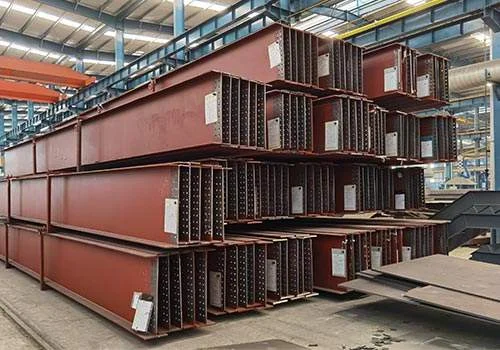
Standard H beam sizes play a crucial role in ensuring the success of construction and engineering projects. These beams are widely used for their versatility, strength, and efficiency in creating stable structures. However, choosing the wrong size can lead to costly mistakes, project delays, and even structural failures. This blog will guide you through the most common standard H beam sizes and their applications to help you make informed decisions for your projects.
What Are Standard H Beam Sizes?
Standard H beam sizes refer to predefined dimensions of H-shaped structural beams that meet specific engineering and construction standards. These beams are widely used in various industries, including construction, shipbuilding, and infrastructure development. Understanding the dimensions and load-bearing capacities of different H beam sizes is essential for selecting the right beam for your project.
Key Characteristics of Standard H Beams:
- Flange Width and Thickness: Determines the strength and stability, ensuring the beam can support heavy loads effectively.
- Web Thickness: Influences load distribution, playing a key role in preventing deformation under stress.
- Length: Can be customized to fit project needs, providing flexibility for various construction applications.
- Material Composition: Commonly made of steel for durability, offering resistance to wear and environmental factors.
Why Choosing the Right H Beam Size Matters
Using the wrong H beam size can lead to structural inefficiencies and increased costs. Selecting the correct size ensures:
- Improved Safety: Proper load-bearing capacity reduces the risk of collapse, ensuring a secure environment for workers and structures.
- Cost-Effectiveness: Minimizes material waste and ensures efficient use of resources, ultimately lowering overall project expenses.
- Project Longevity: Enhances durability and reduces maintenance needs, saving time and costs over the lifespan of the project.
Top 10 Standard H Beam Sizes for Construction Projects


Below is a table detailing 10 commonly used standard H beam sizes, along with their dimensions and typical applications.
| H Beam Size (mm) | Flange Width (mm) | Flange Thickness (mm) | Web Thickness (mm) | Applications |
|---|---|---|---|---|
| 100 x 100 x 6 x 8 | 100 | 6 | 8 | Residential buildings |
| 125 x 125 x 6.5 x 9 | 125 | 6.5 | 9 | Small bridges |
| 150 x 150 x 7 x 10 | 150 | 7 | 10 | Medium-scale constructions |
| 200 x 200 x 8 x 12 | 200 | 8 | 12 | Industrial warehouses |
| 250 x 250 x 9 x 14 | 250 | 9 | 14 | Heavy machinery support |
| 300 x 300 x 10 x 15 | 300 | 10 | 15 | High-rise buildings |
| 350 x 350 x 12 x 19 | 350 | 12 | 19 | Large bridges |
| 400 x 400 x 13 x 21 | 400 | 13 | 21 | Power plants |
| 450 x 450 x 14 x 23 | 450 | 14 | 23 | Shipyards |
| 500 x 500 x 16 x 26 | 500 | 16 | 26 | Dams and tunnels |
Common Mistakes When Using Standard H Beam Sizes
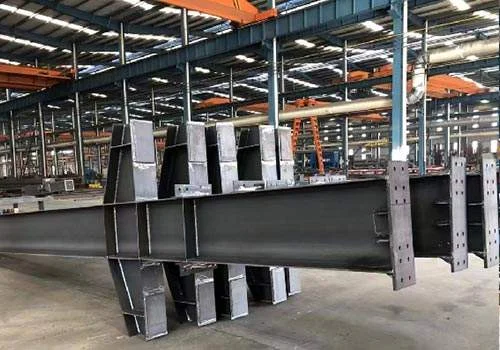
Overlooking Load Requirements
Choosing a beam size without accurately calculating load requirements can lead to structural instability, posing significant safety hazards and increasing the risk of failure under pressure. Proper load analysis is essential to ensure that the beam can handle the intended weight without deforming or collapsing.
Ignoring Material Standards
Ensure the beams meet local or international material standards for safety and durability, as substandard materials can compromise structural integrity. Compliance with these standards not only ensures quality but also prevents potential legal and liability issues in construction projects.
Misjudging Cost vs. Performance
Opting for cheaper beams might reduce initial costs but could lead to higher maintenance expenses in the long run due to frequent repairs or replacements. Balancing cost and performance is critical to achieving a durable, efficient, and cost-effective structure that meets both short-term and long-term goals.
Conclusion
Selecting the right standard H beam sizes is a critical step in ensuring the safety, efficiency, and cost-effectiveness of any construction project. By understanding the characteristics, applications, and common mistakes, you can make informed choices that align with your project requirements. Whether you’re constructing a residential building or a large industrial structure, the knowledge shared here will help you avoid costly mistakes and achieve long-lasting success.
FAQ
Q: What is the primary advantage of using standard H beam sizes?
A: They provide uniform dimensions that simplify design and construction processes, ensuring compatibility across projects.
Q: Can standard H beams be customized?
A: Yes, while the standard sizes are fixed, the length can often be adjusted to meet specific project needs.
Q: How do I determine the right H beam size for my project?
A: Consult a structural engineer to calculate load requirements and match them with the appropriate beam dimensions.
Q: Are standard H beams suitable for all construction projects?
A: While they are versatile, some specialized projects may require custom beams.
Q: How can I ensure the quality of H beams?
A: Purchase from reputable manufacturers who adhere to established engineering standards.