Table of Contents
Introduction

In Malaysia’s construction landscape, structural efficiency is no longer just a technical requirement—it has become a decisive factor in project feasibility, speed of delivery, and long-term performance. Among the different steel structural systems used today, the trussed beam has gained strong attention due to its ability to achieve long spans without excessive material consumption.
From warehouses in industrial zones to large commercial roofing systems, the demand for lightweight yet strong structural frameworks continues to rise. This is where trussed beam systems stand out: they balance structural strength, material efficiency, and adaptability to different engineering conditions.
As a manufacturer working directly with steel structure fabrication, the focus is not only on producing components, but on ensuring each beam performs reliably under real construction conditions in environments like Malaysia, where humidity, rainfall, and load variability are significant design considerations.
How a Trussed Beam Actually Works (Beyond the Textbook Explanation)
A trussed beam is often described as a triangular structural system, but in real engineering practice, its behavior is more about force direction than shape alone.
Instead of relying on solid mass resistance, the system distributes forces through a network of members:
- Upper chord carries compression
- Lower chord resists tension
- Web members transfer internal shear forces
What makes this system efficient is not just geometry, but how it transforms bending stress into axial force. This is why trussed beams are frequently selected for long-span structures where conventional beams begin to lose efficiency.
In practical construction scenarios, this means fewer internal columns, wider usable space, and more flexible architectural planning.
Why Malaysia Projects Rely Heavily on Trussed Beam Structures
Construction conditions in Malaysia are quite specific compared to temperate regions. High humidity, coastal exposure, and fast-growing industrial infrastructure all influence structural decisions.
Instead of focusing only on strength, engineers often prioritize:
- Corrosion resistance over long service life
- Faster installation cycles for industrial projects
- Structural stability under heavy rainfall and wind loads
- Large open spaces for logistics and production facilities
Trussed beam systems naturally align with these requirements. They reduce unnecessary material weight while maintaining structural integrity, which is particularly valuable for warehouses, manufacturing plants, and commercial roofing systems.
Structural Variations Used in Real Engineering Projects
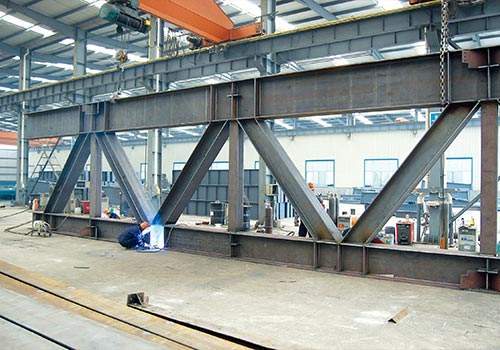
Although the concept of a trussed beam is consistent, its actual design varies depending on application needs. In practice, several structural patterns are commonly used:
Parallel Chord Configuration
Often applied in roof systems where load distribution is relatively uniform. It is widely used in industrial buildings due to its predictable behavior.
Pratt-Based Layout
This configuration is preferred when loads are uneven or dynamic. It provides efficient stress transfer through diagonal members.
Warren Configuration
Recognized for its repetitive triangular pattern, this system is often selected for long-span roofing where simplicity and efficiency are both required.
Project-Specific Custom Systems
In real-world manufacturing, many trussed beams are not standard designs. They are engineered based on:
- Span length
- Load conditions
- Building function
- Environmental exposure
This is where manufacturing capability becomes more important than theoretical design.
What Happens Inside a Trussed Beam Manufacturing Process
The performance of a trussed beam is not determined on paper—it is defined during fabrication.
A controlled manufacturing environment typically includes:
Material Selection Stage
Steel is selected based on structural performance requirements, with attention to:
- Strength consistency
- Weld compatibility
- Environmental resistance
Fabrication Stage
This includes:
- Precision cutting of steel members
- Welding of chord and web components
- Alignment correction during assembly
- Structural inspection at multiple checkpoints
Quality Verification Stage
Rather than relying on visual inspection alone, fabrication quality is verified through:
- Weld integrity testing
- Dimensional accuracy checks
- Structural alignment verification
In steel structure engineering, small deviations during fabrication can lead to major performance differences on site. This is why production control is often more critical than design complexity.
Where Trussed Beams Are Used in Malaysia’s Construction Sector
Instead of listing generic applications, it is more useful to understand how these structures actually function in different project environments:
Industrial Development Zones
Factories and production plants rely on open interior layouts where equipment layout flexibility is important.
Logistics and Warehousing Facilities
Large-span roofing systems allow uninterrupted movement of goods and vehicles.
Commercial Complex Structures
Shopping centers and exhibition halls require wide, column-free interior spaces for usability and design flexibility.
Public Infrastructure Projects
Stadiums and large gathering spaces use trussed beam systems to support long-span roofing without visual obstruction.
Agricultural and Storage Facilities
These structures benefit from ventilation-friendly and cost-efficient roofing systems that still maintain strength under environmental exposure.
Engineering Considerations That Often Get Overlooked

Many structural issues do not come from design concepts, but from execution details.
Load Interpretation Errors
Misjudging live and wind loads can lead to structural inefficiencies or overdesign.
Connection Weak Points
The joints between members often determine the real strength of the system.
Environmental Stress Factors
In Malaysia, corrosion and moisture exposure must be considered from the beginning of the design stage.
Installation Alignment
Even well-designed systems can underperform if on-site assembly lacks precision.
These factors highlight why engineering support from the manufacturing side is often essential in real projects.
What Defines a Reliable Trussed Beam Supplier in Real Projects
In practical terms, a supplier is not just a material provider but part of the engineering process.
Key indicators of capability include:
- Ability to produce consistent structural components
- Experience with international construction standards
- Engineering support during project planning
- Stable fabrication output for large-scale orders
- Understanding of export requirements for Southeast Asian markets
For Malaysia-based projects, this combination is often more important than product specification alone.
Why Direct Manufacturing Support Changes Project Outcomes
Working directly with a manufacturer changes how projects are executed.
Instead of fragmented communication, the process becomes more integrated:
- Engineering feedback is faster
- Design adjustments are more practical
- Fabrication aligns better with site requirements
- Structural issues are identified earlier
- Project coordination becomes more stable
In large construction environments, especially industrial projects, this integration often determines whether timelines remain stable or experience delays.
Maintenance Reality of Trussed Beam Structures

Once installed, trussed beam systems require minimal but consistent attention.
Typical maintenance focus includes:
- Surface protection monitoring
- Joint condition checks
- Corrosion prevention measures
- Drainage performance in roof systems
- Structural alignment inspections over time
Well-maintained steel structures can maintain performance stability over long operational cycles, especially in humid environments like Malaysia.
Conclusion
Trussed beam systems are no longer a niche structural option—they have become a practical engineering solution for modern construction demands in Malaysia. Their ability to support long spans, reduce material usage, and adapt to different building functions makes them a preferred choice in industrial and commercial development.
From a manufacturing perspective, real value is not only in producing steel components, but in ensuring that every structural element performs reliably under real-world conditions. This includes fabrication precision, engineering coordination, and understanding how structures behave after installation.
As Malaysia continues to expand its industrial and infrastructure base, demand for efficient steel structural systems will remain strong. In this environment, working with a capable trussed beam manufacturer is not just a sourcing decision—it is part of the engineering strategy behind every successful project.
FAQ
What is a trussed beam used for in construction?
A trussed beam is mainly used to support long-span structures such as warehouses, factories, stadium roofs, and commercial buildings where open, column-free space is required.
Why are trussed beams popular in Malaysia construction projects?
Trussed beams are widely used in Malaysia due to their ability to handle large spans, perform well in humid climates, and reduce the need for internal support columns in industrial buildings.
What materials are used to manufacture trussed beams?
Most trussed beams are made from structural steel, selected based on strength requirements, corrosion resistance, and project-specific load conditions.
How does a trussed beam improve structural efficiency?
A trussed beam distributes loads through triangular frameworks, converting bending forces into axial tension and compression, which improves strength while reducing material usage.
How do I choose a reliable trussed beam manufacturer?
A reliable manufacturer should have in-house fabrication capability, quality control systems, engineering support, and proven experience in supplying steel structures for industrial and commercial projects.