Table of Contents
Selecting the right steel structural beam is one of the most important decisions in any construction project. The choice directly influences structural stability, safety, long-term durability, and overall project cost, making it essential for project managers and engineers to understand all relevant specifications. As a professional manufacturer specializing in steel structural beams—including H-beams, I-beams, U-channels, and custom fabricated steel members—this guide provides a practical engineering-based explanation to help contractors, consultants, and buyers make informed decisions for projects across Malaysia.
Our goal is to offer a complete and useful resource that supports your purchasing process, improves your understanding of beam specifications, and helps your project meet both performance and regulatory standards. By relying on properly manufactured and certified beams, you can significantly enhance the safety and efficiency of your construction work.
Introduction
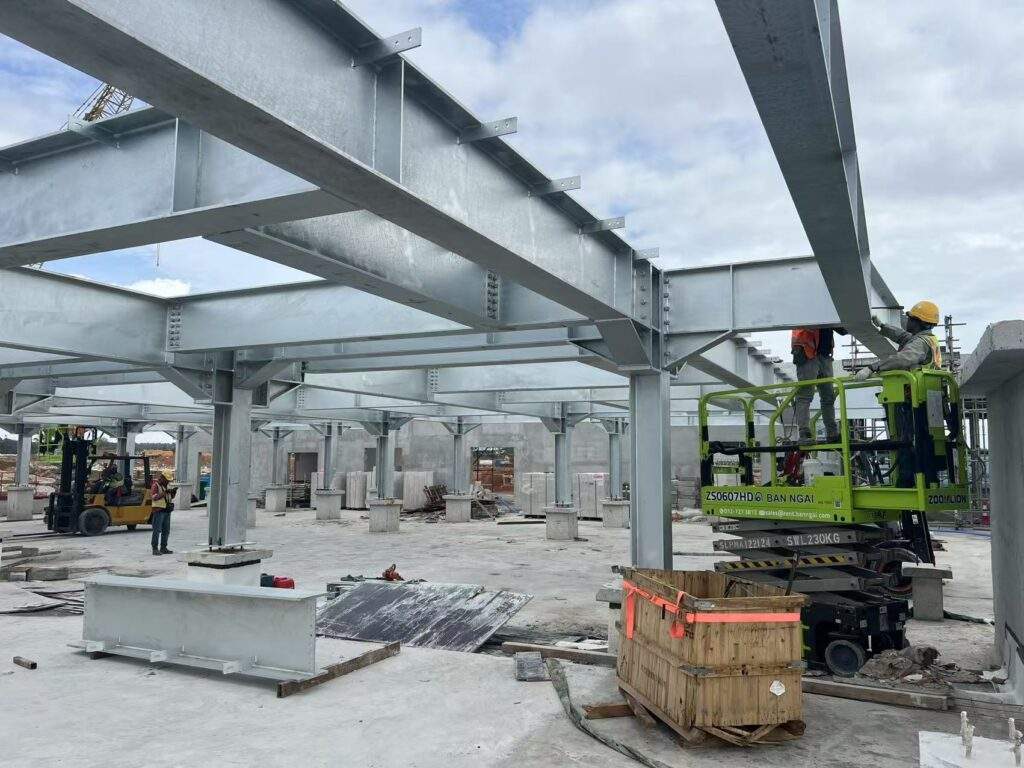
Steel structural beams are essential load-bearing components used in residential, commercial, and industrial construction. They not only provide stability and support the overall structure but also ensure that loads are efficiently distributed to prevent structural failure.
What Steel Structural Beams Are and Why They Matter
A steel structural beam is a specially designed metal element with a distinct profile—such as H, I, or U—that provides excellent strength-to-weight performance. These beams are engineered to withstand bending, compression, and shear forces, ensuring they can perform reliably in demanding structural applications.
The Role of Steel Structural Beams in Modern Construction
With Malaysia’s rapid urban development, steel structural beams have become a preferred choice due to their speed of installation, aesthetic flexibility, and compatibility with modern building methods. Their high load-bearing capacity ensures that both small-scale and large-scale structures meet safety requirements without compromising design efficiency.
Why Quality Matters When Purchasing from a Manufacturer
Consistency in material grade, accurate dimensions, and proper surface treatment significantly affect long-term performance. Purchasing directly from a manufacturer ensures every beam is produced under strict quality control, reducing risks associated with inconsistent materials from third-party sources.
Types of Steel Structural Beams Used in Construction
Different structures require different beam profiles depending on engineering needs. Understanding the types helps you select one that fits your project’s load and design requirements more accurately.
H-Beams (Wide Flange Beams)
Known for their wide flanges and strong load distribution, H-beams are widely used in high-rise buildings, factories, and bridges. Their design makes them ideal for heavy-duty applications where maximum strength is required.
I-Beams (Universal Beams)
Featuring a narrower flange than H-beams, I-beams are commonly used in residential floors, roof structures, and light to medium-duty frames. They are cost-effective and versatile, making them a popular choice for general construction.
U-Beams / C-Channels
U-beams and C-channels are used for lighter structural applications such as purlins, trusses, and machinery frames. Their lightweight profile makes installation easier while still offering reliable performance in non-heavy-load applications.
Hot-Rolled vs. Welded Steel Structural Beams
Hot-rolled beams offer superior uniformity, stability, and strength due to the continuous rolling process. Welded beams, on the other hand, are better for oversized or custom shapes where flexibility in dimension is required.
Key Factors to Consider When Selecting a Steel Structural Beam
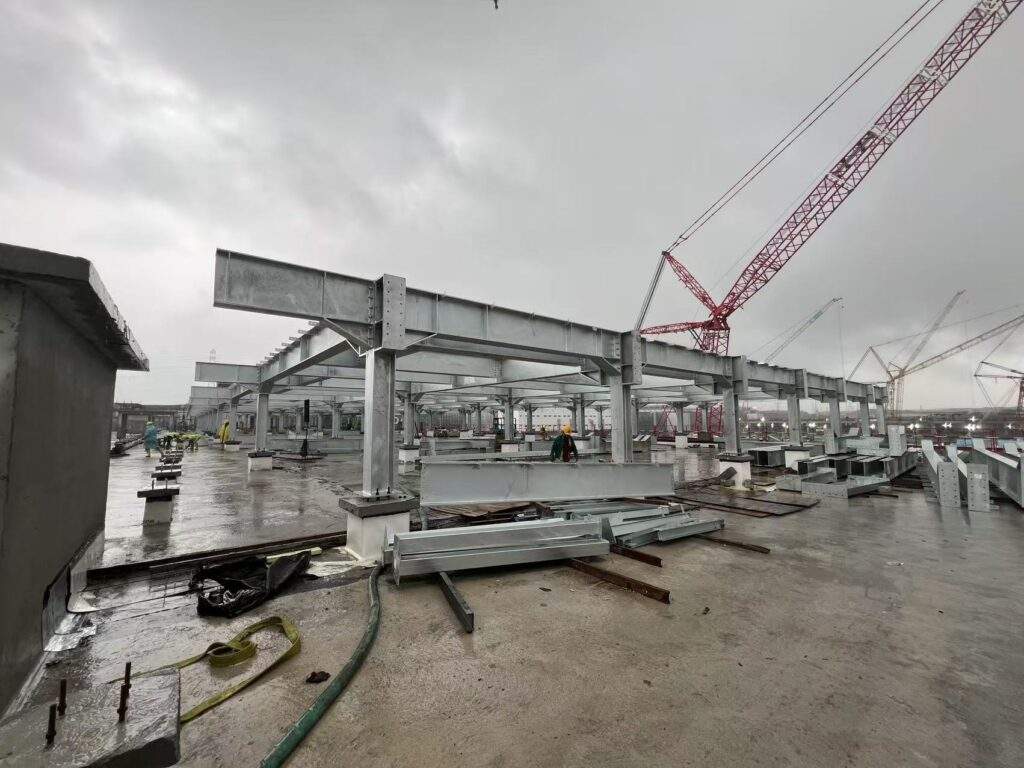
Choosing the correct beam requires more than simply selecting a size from a chart. These essential considerations ensure your beam performs safely and effectively under real project conditions.
Load Bearing Requirements and Structural Design
Assess expected loads, including live load, dead load, wind, machinery vibration, and environmental factors that may impact performance. Proper load calculation ensures the beam can support the structure without excessive deflection.
Beam Size, Thickness, and Length Specifications
Dimensions of a steel structural beam directly affect load capacity and compatibility with architectural requirements. Malaysian projects often use sizes such as H200, H250, H300, and H400, depending on span requirements and structural design.
Material Grades (S275, S355, ASTM Standards)
Higher grades, such as S355, enhance strength and durability, especially for industrial construction. Matching the correct grade to the project improves both safety and long-term performance.
Corrosion Resistance and Surface Protection Options
In tropical climates, hot-dip galvanizing, anti-rust coatings, or epoxy finishing are crucial for preventing premature corrosion. These coatings significantly extend the service life of steel beams in humid or coastal regions.
Understanding Steel Structural Beam Prices
Beam prices vary based on material grade, processing methods, and current steel market trends. Understanding these elements helps you compare quotations more accurately and make the right purchasing decision.
Steel Structural Beam Price Reference Table
| Factor Category | Description | Impact on Price |
|---|---|---|
| Material Grade | S235, S275, S355, ASTM A36 | Higher grade = higher cost |
| Beam Size | H-Beam, I-Beam, U-Channel dimensions | Larger size = more steel = higher cost |
| Surface Treatment | Black steel, galvanized, epoxy-coated | Protection adds cost |
| Length & Cutting | Standard or custom length | Cutting/fabrication increases price |
| Manufacturing Method | Hot-rolled or welded | Hot-rolled often more stable in price |
Understanding these pricing influences helps buyers plan budgets and avoid unexpected cost variations, especially in large-scale projects.
Benefits of Buying Steel Structural Beams from a Manufacturer
Purchasing directly from a manufacturer provides more control over quality, specifications, and pricing. This ensures you receive beams tailored to your project with guaranteed compliance and reliability.
Custom Fabrication and Precise Cutting Services
We support precise length cutting, drilling, welding, slotting, and custom fabrication to match your exact project requirements. This minimizes onsite processing and reduces installation time.
Consistent Material Quality and Compliance with Standards
All beams comply with international standards, ensuring stable performance and safer construction outcomes. Consistent material quality reduces the risk of structural defects and long-term maintenance issues.
Better Bulk Pricing and Stable Supply
Manufacturers offer more competitive pricing than distributors, especially for large orders that require consistent supply. This helps contractors maintain project timelines without material shortages.
Technical Guidance and Engineering Support
Support includes beam selection, load calculation assistance, and installation guidance, allowing engineers and buyers to make informed technical decisions. This ensures the final structure meets performance expectations.
Applications of Steel Structural Beams in Construction
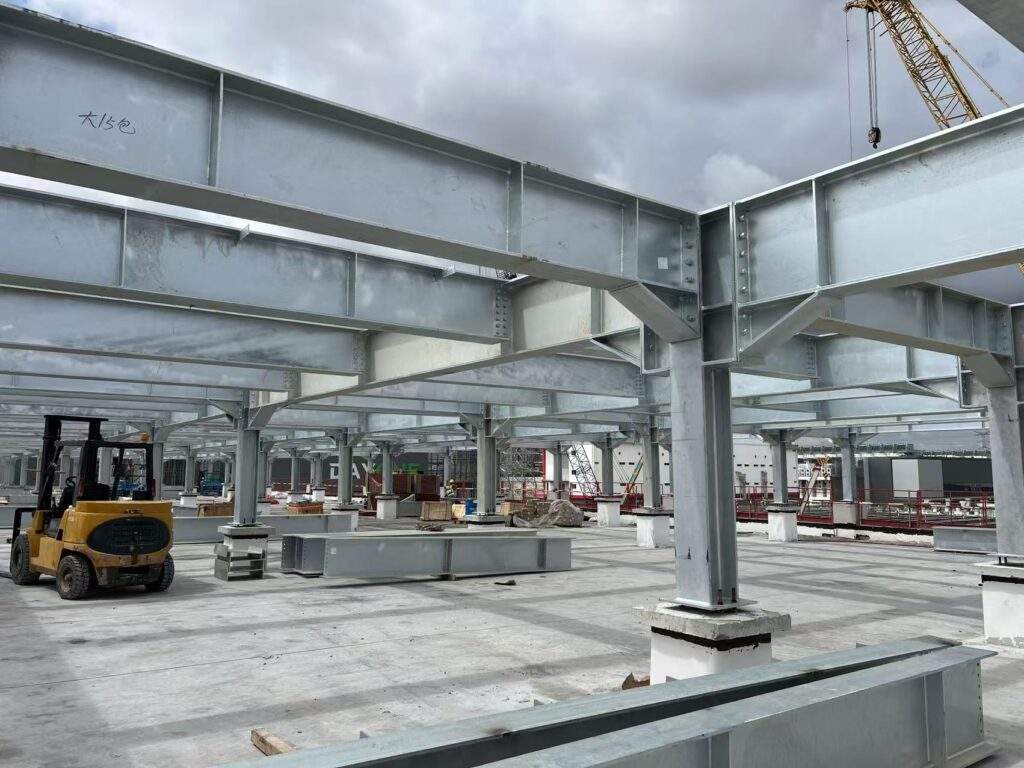
Steel beams play critical roles in various engineering environments. Their flexibility and strength make them suitable for a wide range of building and industrial applications.
Industrial Buildings and Warehouses
These structures require beams capable of supporting heavy loads and long spans, making H-beams and I-beams ideal for such environments. Their stability also ensures better safety for storage and machinery areas.
Residential Structures and Renovation Projects
Steel beams are used for structural reinforcement, flooring support, and roof framing. They allow homeowners and contractors to create open floor layouts with greater design flexibility.
Infrastructure Projects: Bridges, Platforms, Walkways
Their exceptional strength-to-weight ratio makes steel beams suitable for infrastructure requiring long spans and reliable structural stability. These beams also withstand heavy traffic and environmental stress.
Machinery Frames and Support Systems
Steel beams ensure rigidity and stability for industrial equipment and mechanical systems. Their durability supports long-term operational demands without frequent replacement.
How to Verify the Quality of Steel Structural Beams
Quality assurance is essential before installation to ensure that the beams can meet structural performance requirements. Proper checks significantly reduce potential risks on-site.
Material Certificates and Specification Sheets
Verifying the material’s grade, chemical composition, and standard compliance ensures you are receiving the correct steel. This documentation is a reliable indicator of manufacturing quality.
Visual Inspection: Straightness, Surface, Edge Quality
Inspecting beams for deformation, cracks, rust, or poor finishing helps identify early defects. This simple process can prevent structural issues after installation.
Welding and Fabrication Quality Control
Clean, consistent, and smooth welding lines indicate high-quality fabrication. Proper welding reduces the risk of failure under heavy loads.
Load Test and Structural Integrity Evaluation
Load tests provide confirmation that beams can safely carry expected weight under real conditions. They are especially useful for critical structural components.
Common Challenges and How to Avoid Them
Choosing the Wrong Beam Size
Incorrect sizing can lead to excessive deflection or structural instability, potentially compromising safety. Always consult engineering guidelines to avoid miscalculations.
Overlooking Environmental Conditions
Humidity, salt air, and industrial environments can accelerate corrosion if beams are not properly protected. Selecting suitable coatings helps improve longevity.
Failing to Consider Long-Term Durability
Choosing lower-grade material or insufficient protection can lead to future repair costs. Investing in proper specifications at the start reduces long-term structural problems.
Errors During Installation and Handling
Improper handling or installation can cause warping or structural weakness. Training workers and following installation best practices help ensure long-lasting performance.
Why Local Experience Matters in Construction Projects

Understanding Regional Building Codes
Malaysian standards require compliance with MS and BS structural codes to ensure safety and legality. Working with local manufacturers helps ensure full compliance.
Climate Considerations in Tropical Environments
High humidity, heat, and heavy rainfall require the use of beams with superior corrosion protection. Taking climate into account improves the lifespan of the finished structure.
Availability of Local Support and Faster Delivery
Local manufacturing shortens lead times, improves communication, and reduces shipping costs. This ensures smoother project execution and faster material availability.
Conclusion
Selecting the right steel structural beam for construction projects in Malaysia requires a thorough understanding of beam types, load requirements, material grades, and environmental conditions. As a manufacturer, we ensure every beam meets strict quality and industry standards, offering durable, cost-effective, and project-specific solutions. By choosing high-quality beams and working with a reliable supplier, you can significantly enhance the stability, safety, and performance of your building or industrial structure. Whether you need standard beams or custom-fabricated solutions, partnering with the right manufacturer ensures your project is built on a strong and dependable foundation.
FAQ
What is a steel structural beam used for?
A steel structural beam is used to support loads in buildings, bridges, platforms, and industrial structures. Its strength and rigidity help distribute weight safely across the entire framework.
How do I choose the right steel structural beam size?
The correct beam size depends on load requirements, span length, and project design. It’s best to follow engineering calculations or consult a structural specialist to ensure proper strength and stability.
What is the difference between an H-beam and an I-beam?
H-beams have wider flanges and provide higher load capacity, making them ideal for heavy-duty structures. I-beams are lighter and commonly used in residential or medium-load applications.
Are steel structural beams resistant to corrosion?
Yes, steel beams can be corrosion-resistant when coated with galvanizing, epoxy, or anti-rust treatments. This is especially important for tropical climates like Malaysia.
Can steel structural beams be custom fabricated?
Yes, steel structural beams can be customized in length, thickness, drilling, welding, or coating. Manufacturers often provide tailored fabrication to meet specific construction needs.