Welcome to My Blog!
Before we dive into the content, I’d love for you to join me on my social media platforms where I share more insights, engage with the community, and post updates. Here’s how you can connect with me:
Facebook:https://www.facebook.com/profile.php?id=61565337355573
Now, let’s get started on our journey together. I hope you find the content here insightful, engaging, and valuable.
Table of Contents
Introduction

Selecting the right H steel profile is a critical decision in construction and engineering projects, as it directly impacts structural integrity, cost-efficiency, and project timelines. H steel profiles, known for their H-shaped cross-section, are widely used in building frameworks, bridges, and industrial structures due to their excellent load-bearing capacity and versatility. At Guanglei, a leading steel structure enterprise established in 2002, we understand the importance of choosing the appropriate H steel profile to meet diverse project requirements. With advanced production equipment and robust manufacturing capabilities, Guanglei has been designing, producing, and installing high-quality steel structures for over two decades, ensuring reliable solutions for large-scale engineering projects.
This comprehensive guide explores the key factors to consider when selecting an H steel profile, offering insights into types, specifications, applications, and more. Whether you’re an engineer, architect, or project manager, this article will help you make informed decisions to optimize your projects.
What Is an H Steel?
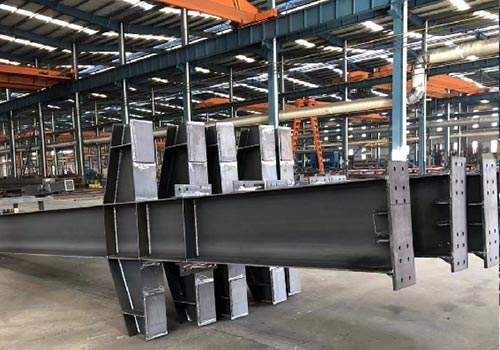
An H steel is a structural steel beam characterized by its H-shaped cross-section, which consists of two parallel flanges connected by a vertical web. This design provides exceptional strength and stability, making H steels ideal for supporting heavy loads in various construction applications. The profile’s geometry allows it to distribute weight evenly, reducing the risk of bending or buckling under stress.
H steels are manufactured through hot rolling or welding processes, ensuring durability and precision. At Guanglei, our advanced production facilities enable us to produce H steels that meet stringent industry standards, catering to projects ranging from high-rise buildings to industrial warehouses.
Types of H Steel Profiles
Standard H Steel Profiles
Standard H steel profiles, such as those adhering to ASTM or EN standards, are widely used in general construction. These profiles come in various sizes and grades, allowing flexibility for different structural needs. Their standardized dimensions make them easy to integrate into designs, ensuring compatibility with other construction materials.
Wide-Flange H Steels
Wide-flange H steel profiles, often referred to as W-beams, have broader flanges compared to standard profiles. This design enhances their load-bearing capacity, making them suitable for large-scale projects like bridges and skyscrapers. Guanglei’s wide-flange H steels are engineered for optimal performance in demanding applications.
Lightweight H Steels
Lightweight H steel profiles are designed for applications where weight reduction is critical without compromising strength. These profiles are commonly used in residential buildings or temporary structures. Guanglei offers customized lightweight H steel profiles to meet specific project requirements, leveraging our expertise in precision manufacturing.
Key Factors to Consider When Choosing an H Steel Profile
Selecting the right H steel involves evaluating several factors to ensure it aligns with your project’s technical and budgetary needs. Below are the primary considerations:
Load-Bearing Requirements
The H steel must support the anticipated loads, including dead loads, live loads, and environmental factors like wind or seismic forces. Engineers must calculate the maximum load to determine the appropriate profile size and grade.
Size and Dimensions
H steel profiles come in various sizes, defined by their flange width, web height, and thickness. Choosing the correct dimensions ensures structural stability and minimizes material waste. Guanglei provides detailed specifications for all our H steels, enabling precise selection for your project.
Material Grade
The steel grade affects the profile’s strength, ductility, and corrosion resistance. Common grades include ASTM A36, A572, and EN S355. Higher-grade H steels are recommended for projects requiring enhanced durability, such as coastal structures exposed to saltwater.
Project Budget
Balancing quality and cost is essential. While high-grade H steels may have a higher upfront cost, they can reduce long-term maintenance expenses. Guanglei’s competitive pricing and efficient production processes make high-quality H steels accessible for projects of all sizes.
Applications of H Steel Profiles
H steel profiles are versatile and used across various industries due to their strength and adaptability. Some common applications include:
- Building Construction: H steels form the backbone of high-rise buildings, providing the framework for floors, columns, and beams.
- Bridge Construction: Their ability to withstand heavy loads makes H steel profiles ideal for bridge girders and supports.
- Industrial Structures: Warehouses, factories, and power plants rely on H steels for robust frameworks.
- Infrastructure Projects: H steels are used in railway tracks, tunnels, and other large-scale infrastructure developments.
Guanglei has successfully supplied H steels for numerous landmark projects, leveraging our integrated design, production, and installation services to deliver tailored solutions.
H Steel Profile Specifications Table
To assist in selecting the right H steel profile, the following table outlines common specifications for standard H steels. This table provides an overview of dimensions and weight, helping engineers and architects make informed choices.
| Profile Designation | Flange Width (mm) | Web Height (mm) | Flange Thickness (mm) | Web Thickness (mm) | Weight (kg/m) |
|---|---|---|---|---|---|
| HEA 100 | 96 | 100 | 5 | 8 | 16.7 |
| HEA 200 | 190 | 200 | 6.5 | 10 | 42.3 |
| HEB 100 | 100 | 100 | 6 | 10 | 20.4 |
| HEB 200 | 200 | 200 | 9 | 15 | 61.3 |
| HEM 100 | 106 | 120 | 12 | 20 | 41.8 |
| HEM 200 | 206 | 220 | 15 | 25 | 103.0 |
This table represents a subset of available H steels. For custom specifications, Guanglei’s technical team can provide tailored solutions to meet your project’s unique requirements.
Advantages of Using H Steel Profiles
H steel profiles offer numerous benefits that make them a preferred choice in construction:
- High Strength-to-Weight Ratio: The H-shaped design provides excellent strength while keeping weight low, reducing foundation costs.
- Versatility: H steels can be used in various structural configurations, from columns to beams.
- Ease of Fabrication: They can be easily cut, welded, or bolted, facilitating efficient construction processes.
- Sustainability: Steel is recyclable, and H steels can be reused or repurposed, aligning with eco-friendly building practices.
Guanglei’s commitment to sustainability ensures that our H steels are produced with environmentally responsible practices, minimizing waste and energy consumption.
Challenges in Selecting H Steels
While H steel profiles are highly beneficial, selecting the right one can present challenges:
- Complex Load Calculations: Incorrect load assessments can lead to choosing an inadequate profile, compromising safety.
- Availability of Sizes: Not all sizes or grades may be readily available, requiring custom orders that can extend timelines.
- Corrosion Concerns: In harsh environments, H steels may require additional coatings or treatments to prevent rust.
Guanglei mitigates these challenges by offering comprehensive consultation services, ensuring that clients receive the right H steel for their specific needs.
How to Ensure Quality When Purchasing H Steel Profiles
To guarantee the quality of H steel profiles, consider the following steps:
- Verify Certifications: Ensure the supplier provides certifications like ISO 9001 or CE marking, confirming adherence to international standards.
- Check Manufacturing Processes: Opt for suppliers with advanced production facilities, like Guanglei, to ensure precision and consistency.
- Request Test Reports: Material test reports verify the steel’s mechanical properties, such as yield strength and tensile strength.
- Evaluate Supplier Experience: Choose a supplier with a proven track record. Since 2002, Guanglei has built a reputation for delivering high-quality H steel profiles for large-scale projects.
Conclusion
Choosing the right H steel profile is a pivotal step in ensuring the success of any construction or engineering project. By understanding the types, specifications, applications, and key selection factors, you can make informed decisions that enhance structural performance and cost-efficiency. Guanglei, with over two decades of expertise in steel structure solutions, is your trusted partner in sourcing high-quality H steel profiles tailored to your needs. Our advanced production capabilities and commitment to excellence ensure that your projects are built to last.
Ready to select the perfect H steel profile for your next project? Contact us at Guanglei to explore our range of solutions and elevate your construction endeavors.
FAQ
What is the difference between HEA and HEB profiles?
HEA profiles are lighter with thinner flanges and webs, suitable for less demanding applications, while HEB profiles are heavier and stronger, ideal for high-load structures.
How do I calculate the load capacity of an H steel profile?
Load capacity depends on the profile’s dimensions, material grade, and span length. Consult an engineer to perform calculations based on your project’s specific conditions.
Can H steels be customized?
Yes, suppliers like Guanglei offer customized H steels to meet unique project requirements, including specific sizes, grades, or coatings.