Welcome to My Blog!
Before we dive into the content, I’d love for you to join me on my social media platforms where I share more insights, engage with the community, and post updates. Here’s how you can connect with me:
Facebook:https://www.facebook.com/profile.php?id=61565337355573
Now, let’s get started on our journey together. I hope you find the content here insightful, engaging, and valuable.
Table of Contents
Introduction
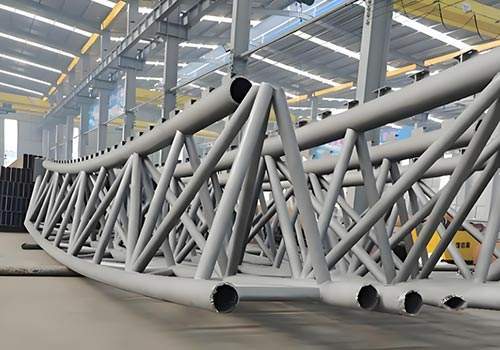
Trussed beams have become a cornerstone in modern structural engineering, offering unmatched strength, versatility, and efficiency. These triangulated frameworks, designed to distribute loads effectively, are widely used in bridges, roofs, and large-scale buildings. At Guanglei, a leading enterprise established in 2002, we specialize in designing, producing, and installing trussed beams for diverse steel structure projects. With advanced production equipment and robust capabilities, we’ve witnessed firsthand how trussed beams revolutionize construction by balancing cost, durability, and design flexibility. This blog explores why trussed beams are essential, delving into their mechanics, benefits, and applications while addressing common questions to provide a comprehensive guide.
The Mechanics Behind Trussed Beam
Trussed beams operate on the principle of triangulation, where members form a series of triangles to create a rigid, load-bearing structure. This geometric configuration ensures that forces are transferred efficiently, minimizing material use while maximizing strength. The primary components—chords, webs, and nodes—work together to handle tension and compression, making trussed beam ideal for spanning large distances. At Guanglei, our design teams leverage advanced software to optimize these configurations, ensuring each trussed beam meets project-specific demands. This structural efficiency is why trussed beam are preferred in applications requiring long spans, such as industrial warehouses and transportation infrastructure.
How Trussed Beam Distribute Loads
The load distribution in trussed beam is a key factor in their effectiveness. The triangular arrangement ensures that loads are spread evenly across the structure, reducing stress concentrations. For example, in a roof truss, the top chord resists compression, the bottom chord handles tension, and the diagonal webs stabilize the system. This balance allows trussed beam to support heavy loads over wide spans without excessive material, a feature that has made them indispensable in modern engineering projects managed by firms like Guanglei, where efficiency and reliability are paramount.
Benefits of Using Trussed Beams in Construction
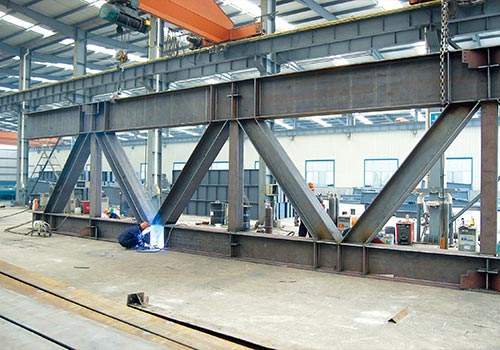
Trussed beams offer several advantages that make them a go-to choice for architects and engineers. Their high strength-to-weight ratio allows for lightweight designs that don’t compromise on durability. Additionally, trussed beam are highly customizable, enabling tailored solutions for unique structural challenges. At Guanglei, our production facilities, equipped with cutting-edge technology, allow us to fabricate trussed beam that meet precise specifications, ensuring both aesthetic appeal and structural integrity. Other benefits include cost-effectiveness, as fewer materials are needed, and ease of installation, which reduces labor costs and project timelines.
Cost-Effectiveness of Trussed Beam
One of the standout features of trussed beam is their cost-effectiveness. By using less material to achieve the same structural performance as solid beams, trussed beam reduce raw material expenses. Furthermore, their prefabricated nature, a specialty at Guanglei since our founding in 2002, allows for faster assembly on-site, cutting down on labor costs. For clients looking to balance budget and quality, trussed beams provide an economical yet robust solution, particularly for large-scale projects like sports arenas or commercial complexes.
Applications of Trussed Beams in Various Industries
Trussed beams are versatile, finding applications across multiple sectors. In bridge construction, they provide the strength needed to span rivers or valleys, as seen in iconic structures like the Sydney Harbour Bridge. In commercial buildings, trussed beam support expansive roofs, creating open, column-free spaces. Guanglei has successfully integrated trussed beam into projects ranging from industrial facilities to public infrastructure, leveraging our integrated design-production-installation model to deliver seamless results. Their adaptability also makes them suitable for temporary structures, such as exhibition halls, where rapid assembly and disassembly are required.
Trussed Beam in Sustainable Design
Sustainability is increasingly critical in construction, and trussed beam contribute significantly to eco-friendly designs. Their efficient use of materials reduces the environmental footprint, and their durability ensures long-lasting structures that require minimal maintenance. At Guanglei, we prioritize sustainable practices, using high-quality steel and precision manufacturing to produce trussed beam that align with green building standards. This makes them an excellent choice for projects aiming for certifications like LEED or BREEAM.
Trussed Beams vs. Other Structural Systems
| Feature | Trussed Beams | Solid Beams | Arched Beams |
|---|---|---|---|
| Material Usage | Low, due to triangulated design | High, solid construction | Moderate, curved design |
| Span Capability | Long spans (up to 100m+) | Shorter spans (up to 30m) | Moderate spans (up to 50m) |
| Weight | Lightweight | Heavy | Moderate |
| Cost Efficiency | High, less material and labor | Moderate, more material | Moderate, complex fabrication |
| Installation Time | Fast, prefabricated components | Slower, heavier components | Moderate, requires precision |
| Aesthetic Flexibility | High, customizable shapes | Limited, uniform appearance | High, elegant curves |
This table, positioned centrally in the article, highlights the advantages of trussed beams over other systems like solid or arched beams. The data underscores why Guanglei favors trussed beams for projects requiring efficiency and versatility, as their lightweight nature and long-span capabilities make them superior for many applications.
Challenges in Designing Trussed Beams
While trussed beam are highly effective, their design and implementation come with challenges. Accurate load calculations are critical, as errors can compromise safety. Additionally, complex geometries require advanced engineering expertise, which Guanglei provides through our experienced design teams. Fabrication must be precise to ensure nodes and members align perfectly, and transportation of large trussed beams to construction sites can pose logistical hurdles. However, with our state-of-the-art facilities and integrated approach, we mitigate these challenges, delivering reliable trussed beam for even the most demanding projects.
Overcoming Fabrication Challenges for Trussed Beam
Fabrication precision is vital for trussed beam, as even minor deviations can affect structural integrity. At Guanglei, our advanced production equipment ensures high accuracy in cutting, welding, and assembling trussed beams. We also employ rigorous quality control processes to verify that each component meets industry standards. By addressing fabrication challenges proactively, we ensure that our trussed beam perform optimally, whether in a high-rise building or a long-span bridge.
The Role of Trussed Beams in Future Construction Trends
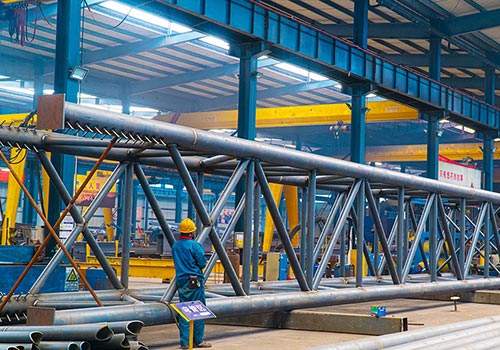
As construction evolves, trussed beam are poised to play a pivotal role in emerging trends. The rise of modular construction, which emphasizes prefabricated components, aligns perfectly with the strengths of trussed beams. Their ability to be pre-assembled off-site, as practiced at Guanglei, supports faster project timelines and reduced on-site disruption. Additionally, advancements in materials, such as high-strength steel alloys, are enhancing the performance of trussed beam, making them suitable for innovative designs like ultra-tall buildings or resilient infrastructure in seismic zones.
Conclusion
Trussed beams have solidified their place as a structural key in modern construction, offering a unique combination of strength, efficiency, and versatility. From bridges to sustainable buildings, their ability to handle large spans with minimal material makes them indispensable. At Guanglei, our 20+ years of experience and advanced production capabilities ensure that our trussed beams meet the highest standards, delivering value to clients worldwide. For your next project, consider the unmatched benefits of trussed beams and contact us at Guanglei to explore tailored solutions. Let’s build the future together—contact us today!
FAQ
What are trussed beam made of?
Trussed beam are typically made of steel or timber, with steel being the most common due to its strength and durability. At Guanglei, we use high-quality steel to fabricate trussed beam, ensuring they meet stringent structural requirements.
How long can trussed beams span?
Trussed beams can span impressive distances, often exceeding 100 meters, depending on the design and materials. This makes them ideal for applications like bridges or large auditoriums, where Guanglei has extensive experience.
Are trussed beams environmentally friendly?
Yes, trussed beams are environmentally friendly due to their efficient material use and long lifespan. Their lightweight design reduces resource consumption, aligning with sustainable construction practices championed by firms like Guanglei.