Welcome to My Blog!
Before we dive into the content, I’d love for you to join me on my social media platforms where I share more insights, engage with the community, and post updates. Here’s how you can connect with me:
Facebook:https://www.facebook.com/profile.php?id=61565337355573
Now, let’s get started on our journey together. I hope you find the content here insightful, engaging, and valuable.
Table of Contents
Introduction
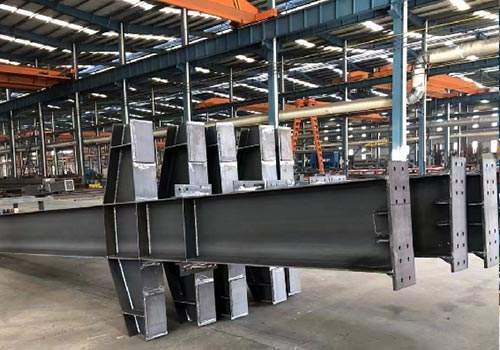
Structural steel components form the backbone of countless modern constructions, from towering skyscrapers and expansive bridges to robust industrial facilities and essential infrastructure. Their inherent strength, durability, and versatility make them an indispensable material in the field of civil engineering and building construction. This blog post delves into the key types of structural steel components, exploring their unique characteristics and diverse applications. Understanding these fundamental elements is crucial for anyone involved in the design, fabrication, or construction of steel structures. We will explore the various shapes, properties, and uses of these essential building blocks, highlighting why structural steel components remain a preferred choice for demanding construction projects worldwide.
Understanding the Properties of Structural Steel Components
The widespread use of structural steel components can be attributed to their exceptional material properties. High strength-to-weight ratio, a key characteristic, allows for the creation of slender and efficient structures capable of bearing significant loads without excessive bulk. Steel’s ductility, the ability to deform significantly under tensile stress before fracturing, provides crucial resilience against seismic activity and other extreme events. Moreover, the weldability of structural steel components facilitates efficient and robust connections, simplifying on-site assembly and ensuring structural integrity. Its machinability allows for precise fabrication into various shapes and sizes, meeting the specific requirements of diverse projects. Furthermore, the recyclability of steel aligns with sustainable construction practices, making structural steel components an environmentally responsible choice. These inherent properties collectively contribute to the safety, longevity, and cost-effectiveness of steel structures.
Key Types of Structural Steel Components: Beams

Beams are fundamental structural steel components designed to resist bending loads. Typically horizontal members, they support vertical loads from floors, roofs, and other structural elements, transferring these loads to columns or walls. Structural steel beams come in a variety of cross-sectional shapes, each offering specific advantages for different applications.
I-Beams (Wide Flange Beams)
I-beams, also known as wide flange beams (W-shapes), are perhaps the most recognizable and widely used structural steel components. Their characteristic “I” or “H” shape comprises two horizontal flanges connected by a vertical web. This configuration provides excellent resistance to bending, with the flanges resisting the majority of the bending moment and the web resisting shear forces. I-beams are highly efficient for carrying heavy loads over long spans and are commonly used in building frames, bridges, and floor systems. Their versatility and strength make them a cornerstone of modern construction.
Channel Beams (C-Shapes)
Channel beams, or C-shapes, feature a distinctive “C” cross-section with one wide flange and one narrower flange connected by a web. While not as efficient in bending as I-beams for biaxial bending, they excel in applications where one flange needs to be connected to another surface, such as in wall girts, stair stringers, and lightweight framing. Their shape provides a convenient surface for attachments and connections.
Angle Sections (L-Shapes)
Angle sections, or L-shapes, are formed by two legs joined at a 90-degree angle. These structural steel components are primarily used for bracing, connections, and as lintels over openings. They provide stability to steel frames and are essential for creating robust connections between other structural members. Angle sections come in equal leg and unequal leg variations to suit different design requirements.
Hollow Structural Sections (HSS)
Hollow Structural Sections (HSS) are closed profile structural steel components with a hollow tubular cross-section. These include square hollow sections (SHS), rectangular hollow sections (RHS), and circular hollow sections (CHS). Their closed shape provides excellent resistance to torsional buckling and uniform strength in all directions, making them ideal for columns, trusses, and aesthetically exposed structural elements. HSS members offer a clean and modern appearance while providing high structural efficiency.
Key Types of Structural Steel Components: Columns
Columns are vertical structural steel components that primarily resist compressive loads from beams, slabs, and roofs, transferring these loads to the foundations. The stability and load-carrying capacity of columns are critical for the overall integrity of any steel structure.
H-Columns
H-columns, often similar in appearance to I-beams but typically with wider and thicker flanges, are specifically designed to resist high axial compression loads. Their shape provides excellent stability and resistance to buckling, making them ideal for multi-story buildings and other structures with significant vertical loads. The robust cross-section of H-columns ensures they can effectively transfer loads down to the foundation.
Box Columns
Box columns are formed by welding or bolting together steel plates to create a hollow rectangular or square cross-section. Similar to HSS members, their closed shape offers high resistance to buckling and torsional forces. Box columns are often used in high-rise buildings and bridges where exceptional strength and stability are required. Their fabrication allows for customization of size and thickness to meet specific load demands.
Pipe Columns
Pipe columns are circular hollow structural steel components known for their excellent resistance to buckling in all directions. They are often used in applications where aesthetics are important, such as in exposed structural frames and architectural features. While primarily designed for axial loads, their shape also provides good resistance to bending moments.
Key Types of Structural Steel Components: Plates
Steel plates are flat structural steel components used for a wide variety of applications, including gusset plates for connecting beams and columns, base plates for transferring column loads to foundations, and shear walls for providing lateral stability. The thickness and size of steel plates can be varied to suit specific load and connection requirements. They are essential for creating strong and stable connections within a steel frame.
Key Types of Structural Steel Components: Connecting Elements
Connecting elements are crucial structural steel components that facilitate the joining of various structural members. These include bolts, welds, rivets, and various types of connectors. The design and execution of these connections are critical for the overall strength and stability of a steel structure. Proper selection and installation of connecting elements ensure load transfer between components.
Applications of Structural Steel Components
Structural steel components find widespread application across numerous sectors due to their versatility and performance. In building construction, they form the skeletal framework of high-rise buildings, industrial sheds, commercial complexes, and residential structures, providing strength and stability. Bridges rely heavily on structural steel components for their main load-bearing elements, ensuring the safe passage of vehicles and pedestrians. Infrastructure projects, such as power plants, stadiums, and transportation hubs, utilize structural steel for its ability to create large, open spaces and support heavy equipment. Industrial facilities, including factories and warehouses, benefit from the durability and adaptability of steel structures. The use of structural steel components contributes to efficient construction timelines, long-term durability, and design flexibility in a wide range of applications.
Table of Common Structural Steel Components and Their Typical Uses

| Component Type | Typical Cross-Section | Primary Use | Common Applications |
|---|---|---|---|
| I-Beams (Wide Flange) | I or H | Resisting bending moments and shear forces | Building frames, floor beams, bridge girders, roof structures |
| Channel Beams (C-Shapes) | C | Providing a surface for connections, resisting bending in one plane | Wall girts, stair stringers, lightweight framing, bracing |
| Angle Sections (L-Shapes) | L | Bracing, connecting other members, lintels | Truss members, connection angles, edge protection |
| Hollow Structural Sections | Square, Rectangular, Circular | Resisting axial loads, bending, and torsion with uniform strength | Columns, trusses, architectural features, railings |
| H-Columns | Wide H | Resisting high axial compression loads | Columns in multi-story buildings, heavy load-bearing structures |
| Box Columns | Hollow Square/Rectangle | Resisting high axial and buckling loads | High-rise building columns, bridge piers |
| Pipe Columns | Circular Hollow | Resisting axial loads and buckling with aesthetic appeal | Exposed structural frames, architectural supports |
| Steel Plates | Flat Sheet | Connecting members, transferring loads, providing shear resistance | Gusset plates, base plates, shear walls, stiffeners |
| Connecting Elements | Bolts, Welds, etc. | Joining structural steel components | All types of steel structures |
Conclusion
Structural steel components are the essential building blocks of modern construction, offering unparalleled strength, durability, and versatility. From the ubiquitous I-beams and sturdy columns to versatile plates and critical connecting elements, each type plays a vital role in creating safe, efficient, and long-lasting structures. Understanding the properties and applications of these key components is fundamental for anyone involved in the construction industry. If you are looking for high-quality structural steel components for your next project, contact us today to discuss your specific needs and discover how our products can contribute to your success.
FAQ
What are the main advantages of using structural steel components?
Structural steel components offer several key advantages, including a high strength-to-weight ratio, excellent ductility, ease of fabrication and erection, weldability, and recyclability. These properties contribute to efficient designs, faster construction times, and sustainable building practices.
What are the different shapes of structural steel components?
Common shapes include I-beams (wide flange), channel beams (C-shapes), angle sections (L-shapes), and hollow structural sections (HSS) such as square, rectangular, and circular tubes. Each shape is designed for specific structural applications and load-bearing requirements.
How are structural steel components connected?
Structural steel components are typically connected using methods such as bolting, welding, and sometimes riveting. The choice of connection method depends on factors such as the type of load, the specific components being joined, and on-site conditions.
What are structural steel plates used for?
Steel plates have diverse applications, including connecting beams and columns (gusset plates), transferring column loads to foundations (base plates), providing lateral stability (shear walls), and reinforcing other structural members (stiffeners).