Deciding between Pratt, Howe, or Warren trusses?
Our team helps you select the optimal trussed beam type based on span, load, and budget. We fabricate to exact specifications with certified welding.
Request a free structural analysis → [Contact Us]
Table of Contents
Introduction
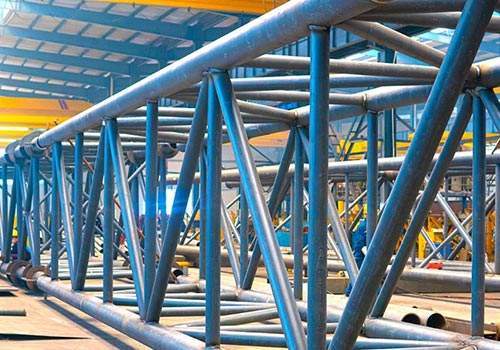
When it comes to supporting large structures such as bridges, roofs, and industrial buildings, the trussed beam is a tried-and-true component in modern construction. This article explores the various types of trussed beams used in engineering and architecture, the key differences between them, and how they contribute to structural efficiency and load distribution. Whether you are an architect, engineer, builder, or simply a construction enthusiast, understanding the functionality and versatility of trussed beams can greatly enhance your project planning and execution. The right selection of trussed beam types can make a significant difference in terms of performance, budget, and long-term durability.
What is a Trussed Beam?
A trussed beam is a structural element made up of triangular units, known as trusses, connected at joints to form a rigid framework. These units are composed of straight members that can withstand both tension and compression, making trussed beams exceptionally efficient at distributing loads. The simplicity of the triangular design is what gives the structure its stability, allowing it to support significant weight over long spans. Whether used in bridges or buildings, a beam truss offers strength without the need for excessive material, making it a popular choice in cost-sensitive and large-scale projects.
Advantages of Using Trussed Beams
Trussed beams offer numerous benefits in construction and structural engineering, such as:
- Load Distribution: The triangular arrangement provides excellent strength and distributes weight evenly.
- Material Efficiency: They often use less material than solid beams while achieving the same or greater strength.
- Design Versatility: Suitable for a wide variety of architectural designs and load requirements.
- Cost-Effectiveness: Reduced material needs and faster construction times can lead to significant cost savings.
- Modular Construction: Many beam trusss can be prefabricated off-site for rapid on-site assembly.
Another major advantage is the ability of beam trusss to adapt to both aesthetic and functional demands. Engineers and architects often appreciate their flexibility, especially when balancing form and function in a design.
Common Types of Trussed Beams
Warren Trussed Beam
The Warren truss consists of equilateral triangles that alternate direction, creating a zigzag pattern. It offers good weight distribution and is commonly used in bridges and roof supports. This configuration minimizes the need for vertical members, which reduces material usage and simplifies construction. It’s particularly efficient for uniform loads, making it a go-to design for long-span applications.
Pratt Trussed Beam
A Pratt truss features vertical members and diagonals that slope downward towards the center. It is highly efficient under vertical loads and is widely used in railway and highway bridges. Its design allows for excellent tension management in the diagonal members, enhancing its durability under repetitive load cycles. The Pratt beam truss remains a classic example of how structural simplicity can achieve high performance.
Howe Trussed Beam
In contrast to the Pratt truss, the Howe truss has diagonals that slope upward toward the center. This design is ideal for heavy loads and was traditionally used in wooden bridges. The compression in diagonal members and tension in verticals are reversed from the Pratt, making it more suitable for timber construction. Today, it still finds use in certain roof systems and restoration projects.
K Trussed Beam
The K truss gets its name from the K-shaped arrangement of its web members. This design allows for better control of buckling in the compression members, providing enhanced strength. The K beam truss is also preferred when a balance between material efficiency and performance is needed, especially in industrial buildings. Its compact and efficient structure makes it particularly useful in high-stress environments.
Fink Trussed Beam
Fink trusses are often used in residential roof construction. They feature a pattern of V-shaped web members that efficiently handle roof loads. Their compact and repetitive layout allows for easy manufacturing and installation. Fink trussed beams are cost-effective and visually neat, making them an ideal option for homes and smaller buildings.
Bowstring Trussed Beam
A bowstring truss resembles the shape of a bow and is particularly useful in wide-span structures like airplane hangars and sports arenas. Its curved top chord and straight bottom chord form a powerful shape for load dispersion. Bowstring beam truss are especially valued for their aesthetics, making them popular in modern public and commercial architecture.
Vierendeel Trussed Beam
Unlike typical trusses, Vierendeel trusses do not rely on triangular patterns. They use rectangular openings and rigid joints, making them aesthetically pleasing and ideal for architectural applications. Because they lack traditional triangular units, they require more material and structural calculation. However, the clean lines of a Vierendeel beam truss make it a favorite in high-design buildings where visibility is key.
Fan Trussed Beam
A fan truss is a variation where the web members spread out from a central point like a fan. It combines efficiency with visual appeal, suitable for open, elegant spaces. Fan beam truss are often seen in artistic pavilions or concert venues where both function and form are necessary. Their open design helps in improving airflow and natural light distribution.
Comparison Table of Trussed Beam Types
| Trussed Beam Type | Shape & Pattern | Best Application | Load Bearing Efficiency | Aesthetic Value |
|---|---|---|---|---|
| Warren Truss | Zigzag triangles | Bridges, industrial roofs | High | Moderate |
| Pratt Truss | Diagonals inward | Railways, highways | Very High | Low |
| Howe Truss | Diagonals outward | Wooden structures, older bridges | High | Low |
| K Truss | K-shaped members | High-load bridges | Very High | Moderate |
| Fink Truss | V-shaped members | Residential roofs | Moderate | High |
| Bowstring Truss | Curved top chord | Wide-span arenas, hangars | High | Very High |
| Vierendeel Truss | Rectangular pattern | Architectural buildings | Moderate | Very High |
| Fan Truss | Radial pattern | Open-concept buildings | High | High |
This comparison provides a snapshot of how each beam truss functions within different applications. By evaluating load efficiency and aesthetic value together, designers can make more informed decisions for their projects.
Factors to Consider When Choosing a Trussed Beam
Load Requirements
One of the most critical factors in selecting the right beam truss is understanding the nature and magnitude of the loads the structure will endure. Whether it’s live loads (like people or traffic) or dead loads (like the structure’s own weight), the choice of beam should match these requirements. Overestimating or underestimating the load can lead to structural failures or overspending on materials.
Span Length
The distance the beam must span without support affects the type of truss that should be used. Bowstring and K trusses are great for longer spans, while Fink and Fan trusses suit shorter spans. Longer spans require advanced design techniques to minimize deflection and increase rigidity. Choosing the right type ensures durability and cost efficiency.
Material Selection
Steel, wood, and aluminum are common materials for beam truss. The choice depends on the environmental conditions, cost, and aesthetic goals of the project. For outdoor or high-humidity environments, galvanized steel or treated timber may be necessary to prevent degradation. Understanding the material’s tensile and compressive strengths is crucial in truss design.
Ease of Fabrication and Installation
Prefabricated trussed beams can reduce on-site labor costs and construction timelines. Consider the ease of transport and installation when selecting a beam type. Large structures might require segmental delivery and assembly, while smaller trusses can often be lifted and installed in one piece. Time and labor savings can translate directly into budget savings.
Applications of Trussed Beams in Construction
Trussed beams are used in an array of construction projects due to their flexibility and load-bearing capacity:
- Bridges: Both pedestrian and vehicular bridges rely on beam truss for their strength and durability.
- Roof Structures: From residential homes to large stadiums, beam truss support complex roofing systems.
- Towers and Cranes: The structural stability of trussed beams makes them perfect for vertical applications.
- Aircraft Hangars: Bowstring trusses create large, open interior spaces without columns.
- Stage Rigging: Temporary structures for concerts or events often employ lightweight beam truss for rapid setup and teardown.
Their widespread use in so many sectors shows how adaptable beam truss are. These applications demonstrate their effectiveness not just in load handling, but also in aesthetics, transport, and scalability.
Design Considerations for Trussed Beam Structures

Structural Analysis
Each trussed beam must be analyzed for force distribution, bending moments, and stress concentration to ensure safety and reliability. Software like AutoCAD or Revit is often used in modern analysis. Engineers perform finite element analysis (FEA) to predict how the structure will behave under various loads.
Joint Design
Since beam truss rely heavily on joints for stability, their design must ensure minimal movement and resistance to fatigue. Bolted, welded, or gusseted connections are common choices. High-quality joints are essential for the long-term performance of any trussed beam system.
Environmental Exposure
Outdoor structures must consider wind, snow, and seismic loads. Material treatments and coatings can enhance durability in such environments. UV protection and corrosion resistance are important for trussed beams exposed to harsh climates.
Conclusion
Understanding different beam truss types is essential for anyone involved in construction, architecture, or structural engineering. Each type offers unique benefits suited to specific load requirements, spans, and aesthetic preferences. With innovations continuously improving their design and functionality, trussed beams remain a cornerstone of modern structural systems.
Looking for expert guidance or premium trussed beam products for your next project? Contact us today to explore the best solutions tailored to your specific structural needs.
FAQ
What is the strongest type of trussed beam?
The strength of a trussed beam depends on its application, but K trusses and Pratt trusses are generally considered among the strongest for heavy loads.
Can trussed beams be used in residential construction?
Yes, types like Fink and Fan trusses are commonly used in residential roofs for their lightweight and strong properties.
How do I choose the right beam truss?
Consider factors like load requirements, span length, environmental exposure, and budget. Consulting with a structural engineer is always recommended.