Welcome to My Blog!
Before we dive into the content, I’d love for you to join me on my social media platforms where I share more insights, engage with the community, and post updates. Here’s how you can connect with me:
Facebook:https://www.facebook.com/profile.php?id=61565337355573
Now, let’s get started on our journey together. I hope you find the content here insightful, engaging, and valuable.
Table of Contents
Introduction
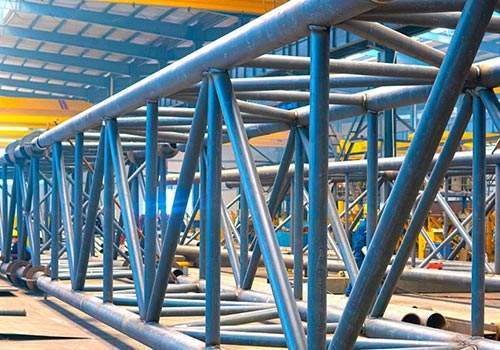
In the world of construction and engineering, efficiency and strength are paramount. This is where trusses beams play a crucial role. These structural elements, known for their ability to span large distances with minimal material, have revolutionized the way we build. The utilization of trusses beams not only optimizes material usage but also enhances structural integrity, leading to more sustainable and cost-effective projects. This blog delves into the intricacies of trusses beams, exploring their types, applications, and the factors that contribute to their efficiency. Understanding the fundamentals of trusses beams is essential for anyone involved in construction, design, or engineering projects, as they form the backbone of many modern structures.
Understanding the Basics of Trusses Beams
Trusses beams are structural frameworks composed of interconnected triangular units. This design allows for even distribution of weight, making them incredibly strong and efficient. The key to their efficiency lies in their ability to handle both tension and compression forces, which are critical for structural stability. This makes trusses beam ideal for structures requiring large spans, such as bridges, roofs, and industrial buildings, where traditional beams would require excessive material. The arrangement of the members within a truss beam is crucial to its strength and stability, as it dictates how forces are transferred throughout the structure.
Types of Trusses Beams and Their Applications
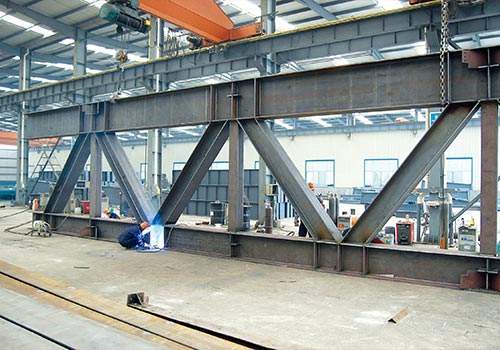
There are numerous types of trusses beams, each with specific applications, catering to a wide range of structural needs:
- Pratt Trusses: Commonly used in bridges, Pratt trusses are characterized by vertical members and diagonal members sloping towards the center, providing excellent load distribution. They are particularly effective for long spans where heavy loads are expected.
- Howe Trusses: Similar to Pratt trusses, but with diagonal members sloping towards the supports, Howe trusses are often used in timber structures, taking advantage of the material’s compressive strength. Their design is especially suitable for supporting uniformly distributed loads.
- Warren Trusses: Known for their equilateral or isosceles triangular members, Warren trusses are frequently used in bridges and roofs, offering a balance of strength and material efficiency. The consistent triangular pattern allows for even stress distribution.
- Fink Trusses: These are commonly used in roof structures, where they distribute weight efficiently across large spans, providing a lightweight yet robust solution. Their intricate design allows for complex roof shapes.
- King Post Trusses: A simple design with a central vertical post, ideal for shorter spans, providing a cost-effective solution for residential and small commercial buildings.
- Queen Post Trusses: An enhancement of the King Post, with two vertical posts, allowing for slightly longer spans, providing greater flexibility in design and load capacity.
Each type of trusses beam offers unique advantages, and selecting the right type is critical for the success of any project, ensuring optimal performance and cost-effectiveness.
The Efficiency of Trusses Beams in Construction
The efficiency of trusses beams stems from their ability to maximize strength while minimizing material usage. This results in cost savings and reduced environmental impact, making them a sustainable choice for modern construction. The triangular design of trusses beams ensures that loads are distributed evenly, preventing excessive stress on any single member, thus enhancing overall structural integrity. Furthermore, the open web design of trusses beam allows for easy integration of utilities, such as pipes and wiring, streamlining the construction process.
Materials Used in Trusses Beams
The choice of material for trusses beam is crucial to their performance, influencing their strength, durability, and cost:
- Steel: Known for its strength and durability, steel is widely used in heavy-duty applications, such as bridges and industrial buildings, where high load capacity is required.
- Timber: A sustainable and versatile material, timber is ideal for residential and light commercial projects, offering a natural and aesthetically pleasing option. It is also renewable material.
- Aluminum: Lightweight and corrosion-resistant, aluminum is suitable for applications where weight is a concern, such as aerospace and specialized structures. It is also excellent for environments with high humidity.
- Composite Materials: These offer a combination of strength and lightweight properties, ideal for specialized applications, such as high-performance structures and aerospace components. These materials can be engineered to meet very specific needs.
The selection of material depends on factors such as load requirements, environmental conditions, and budget, ensuring the optimal balance of performance and cost.
Factors Affecting Trusses Beam Performance
Several factors influence the performance of trusses beam, requiring careful consideration during the design and construction phases:
- Span Length: The distance between supports significantly impacts the design and material selection, as longer spans require stronger and more robust trusses.
- Load Requirements: The weight that the truss must support determines the size and strength of the members, ensuring structural integrity under various loading conditions.
- Environmental Conditions: Factors such as wind, snow, and seismic activity must be considered in the design, as they can exert significant forces on the structure.
- Material Properties: The strength, stiffness, and durability of the chosen material are critical, as they directly impact the truss’s ability to withstand loads and environmental stresses.
- Truss Design: The arrangement of members and the type of truss significantly affect its performance, dictating how forces are distributed and managed.
Design Considerations for Trusses Beams
Designing effective trusses beam requires careful consideration of several factors, ensuring safety and efficiency. Structural analysis, load calculations, and material selection are all critical aspects of the design process, requiring precision and expertise. Computer-aided design (CAD) software and structural analysis tools play a vital role in ensuring accuracy and efficiency, streamlining the design process. Additionally, adherence to building codes and standards is essential for safety and compliance, guaranteeing the structural integrity of the project.
Trusses Beams in Modern Architecture
Trusses beams have become integral to modern architecture, enabling the creation of innovative and visually stunning structures. Their ability to span large distances without intermediate supports allows for open, spacious interiors, enhancing architectural flexibility. Architects and engineers continue to push the boundaries of design, utilizing trusses beams to create iconic buildings and infrastructure projects, showcasing their versatility and strength.
Comparative analysis of Trusses Beams materials.
Here is a table showing some properties of common Truss Beam materials.
| Material | Strength-to-Weight Ratio | Corrosion Resistance | Cost | Common Applications |
|---|---|---|---|---|
| Steel | High | Low (requires protection) | Moderate to High | Bridges, industrial buildings |
| Timber | Moderate | Moderate (requires treatment) | Low to Moderate | Residential, light commercial |
| Aluminum | Moderate to High | High | High | Aerospace, lightweight structures |
| Composite Materials | Very High | Very High | Very High | Specialized, high-performance applications |
Conclusion
Trusses beams are indispensable structural elements that provide strength, efficiency, and versatility, making them essential for modern construction. Their ability to span large distances with minimal material makes them ideal for various construction and engineering projects, enabling innovative and sustainable designs. By understanding the types, applications, and design considerations of trusses beams, we can create more efficient and sustainable structures, optimizing material usage and reducing environmental impact. If you are interested in acquiring Trusses beams for your next project, contact us today, and let us help you build a stronger tomorrow, ensuring the success and longevity of your structural endeavors.
FAQ
What are the main advantages of using trusses beams?
Trusses beams offer high strength-to-weight ratios, allowing for large spans with minimal material, reducing construction costs and environmental impact. They also distribute loads evenly, enhancing structural stability and preventing localized stress concentrations.
How do I choose the right type of trusses beams for my project?
The choice depends on factors such as span length, load requirements, and environmental conditions, requiring a thorough analysis of the project’s specific needs. Consulting with a structural engineer is recommended to ensure optimal performance and safety.
What materials are commonly used for trusses beams?
Steel, timber, aluminum, and composite materials are commonly used, each with unique properties and applications, catering to various structural requirements. The selection of the right material is crucial for the project’s success.
How do environmental factors affect trusses beams design?
Environmental factors such as wind, snow, and seismic activity must be considered to ensure the structural integrity of the trusses beams, protecting the structure from potential damage. These factors can impose significant loads and stresses.