Welcome to My Blog!
Before we dive into the content, I’d love for you to join me on my social media platforms where I share more insights, engage with the community, and post updates. Here’s how you can connect with me:
Facebook:https://www.facebook.com/profile.php?id=61565337355573
Now, let’s get started on our journey together. I hope you find the content here insightful, engaging, and valuable.
Table of Contents
Introduction

In the realm of modern construction, steel box columns stand as a testament to engineering ingenuity, offering a unique combination of strength, versatility, and aesthetic appeal. These structural members, formed by welding steel plates together to create a hollow section, are widely used in various applications, from high-rise buildings and bridges to industrial facilities and infrastructure projects. As a leading steel structure service provider, we understand the critical role of steel box columns in ensuring structural integrity and design flexibility. This comprehensive guide will delve into the world of steel box columns, exploring their types, manufacturing processes, advantages, applications, and considerations for design and installation, subtly highlighting our company’s expertise and capabilities in providing top-tier steel structure solutions.
Defining Steel Box Columns: Construction and Composition
A steel box column, also known as a hollow structural section (HSS) or rectangular hollow section (RHS), is a structural member with a hollow, box-like cross-section. It is typically manufactured by welding steel plates together to form a closed shape, most commonly square or rectangular, but sometimes also circular or elliptical. The resulting hollow section offers several advantages over other structural shapes, such as I-beams or channels.
Manufacturing Process of Steel Box Columns
Several methods are employed to manufacture steel box columns:
- Welding: This is the most common method, involving welding steel plates together along their edges to create the desired shape. Different welding techniques, such as submerged arc welding (SAW) or gas metal arc welding (GMAW), may be used depending on the thickness of the plates and the required quality.
- Cold Forming: In this process, steel plates are bent into shape at room temperature using specialized machinery. This method is typically used for smaller sections and thinner plates.
- Hot Forming: Similar to cold forming, but the steel plates are heated before bending, allowing for larger sections and thicker plates to be formed.
Advantages of Using Steel Box Columns in Construction


Steel box columns offer numerous advantages that make them a preferred choice for many construction projects:
- High Strength-to-Weight Ratio: The hollow section provides excellent strength and stiffness while minimizing weight, making them ideal for long spans and high-rise buildings.
- Uniform Load Distribution: The closed shape allows for uniform distribution of loads, enhancing structural stability and resistance to buckling.
- Torsional Strength: Steel box columns offer excellent resistance to twisting or torsional forces, making them suitable for applications where lateral loads are a concern.
- Aesthetic Appeal: The clean lines and smooth surfaces of steel box columns offer a modern and aesthetically pleasing appearance.
- Ease of Fabrication and Connection: Steel box columns can be easily fabricated and connected using welding or bolting, simplifying construction and reducing on-site labor.
Comparison of Steel Box Columns with Other Structural Shapes
| Feature | Steel Box Column | I-Beam | Channel |
|---|---|---|---|
| Strength-to-Weight | High | Moderate | Moderate |
| Torsional Strength | High | Low | Low |
| Buckling Resistance | High | Moderate | Low |
| Aesthetic Appeal | High | Moderate | Low |
| Fabrication Ease | Moderate | High | High |
| Connection Ease | Moderate | High | Moderate |
Applications of Steel Box Columns in Various Industries
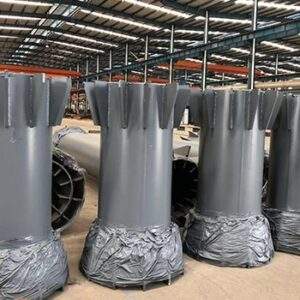


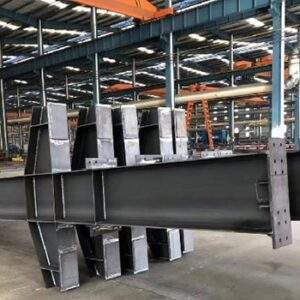
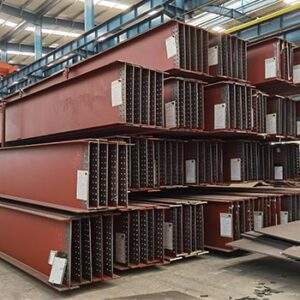
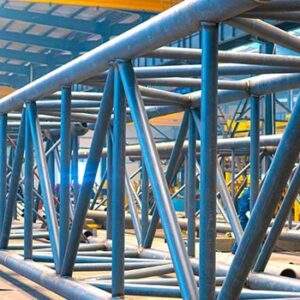
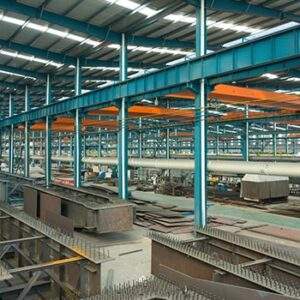
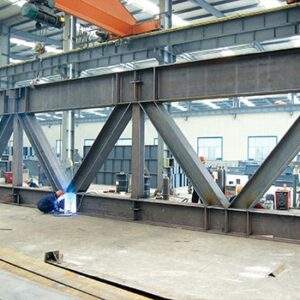
Steel box columns are widely used in a variety of applications:
- High-Rise Buildings: Their high strength-to-weight ratio and resistance to buckling make them ideal for supporting the vertical loads in tall structures.
- Bridges: Their torsional strength and ability to handle lateral loads make them suitable for bridge construction.
- Industrial Facilities: They are used for supporting roofs, floors, and other structural elements in factories, warehouses, and other industrial buildings.
- Infrastructure Projects: They are used in various infrastructure projects, such as stadiums, airports, and transportation hubs.
Design and Installation Considerations for Steel Box Columns
Proper design and installation are crucial for ensuring the structural integrity and safety of steel box columns:
- Load Calculations: Accurate load calculations are essential for determining the appropriate size and thickness of the box columns.
- Connection Design: The design of connections between box columns and other structural members must be carefully considered to ensure adequate strength and stability.
- Welding Quality: High-quality welding is essential for ensuring the integrity of the box column and preventing failures.
- Corrosion Protection: Appropriate corrosion protection measures, such as painting or galvanizing, should be applied to protect the steel from environmental factors.
Our Expertise in Steel Structure Services

Our company specializes in providing comprehensive steel structure services, including the design, fabrication, and installation of steel box columns. We have extensive experience working on a wide range of projects, from small-scale buildings to large-scale infrastructure projects. Our team of skilled engineers and fabricators is committed to delivering high-quality solutions that meet our clients’ specific needs.
Conclusion
Steel box columns are a versatile and reliable structural solution for a wide range of construction applications. Their high strength-to-weight ratio, torsional strength, and aesthetic appeal make them a preferred choice for many projects. By understanding their types, manufacturing processes, advantages, and design considerations, engineers and builders can effectively utilize steel box columns to create safe, efficient, and aesthetically pleasing structures. Our company is dedicated to providing top-tier steel structure services, ensuring the success of our clients’ projects.
FAQ
Q: What are the advantages of using steel box columns over concrete columns?
A: Steel box columns offer a higher strength-to-weight ratio, faster construction time, and greater design flexibility compared to concrete columns.
Q: What are the different types of steel used to manufacture box columns?
A: Various grades of structural steel can be used, depending on the required strength and application. Common grades include ASTM A500, A53, and EN 10219.
Q: What are the typical applications of steel box columns in bridge construction?
A: Steel box columns are used for bridge piers, columns, and other structural elements that require high strength and torsional stiffness.
Q: How can I ensure the quality of welding in steel box column fabrication?
A: Using certified welders, implementing quality control procedures, and conducting non-destructive testing (NDT) can ensure welding quality.
Q: What services does your company offer related to steel box columns?
A: We offer a full range of services, including design, fabrication, installation, and project management for steel box column structures.