Welcome to My Blog!
Before we dive into the content, I’d love for you to join me on my social media platforms where I share more insights, engage with the community, and post updates. Here’s how you can connect with me:
Facebook:https://www.facebook.com/profile.php?id=61565337355573
Now, let’s get started on our journey together. I hope you find the content here insightful, engaging, and valuable.
Structural steel is one of the most widely used materials in construction, offering high strength, durability, and versatility. Understanding its physical properties, particularly the density of structural steel, is essential for engineers, architects, and construction professionals when planning and designing various structures. The density of structural steel directly impacts the design, weight calculations, and overall strength of steel components used in construction projects.
In this article, we will explore the density of structural steel, how it varies, its role in construction, and its importance in material selection for different projects. We will also provide insights into how the density of structural steel affects performance and applications across industries.
Table of Contents
Introduction


The density of structural steel is one of the key characteristics that determine how heavy and strong the material will be. In construction, steel is favored for its ability to carry heavy loads and its relative lightness compared to other materials, making it ideal for large buildings, bridges, and industrial applications. Whether it’s for a residential skyscraper, a bridge, or a factory framework, knowing the density of structural steel helps engineers to design and calculate how much weight a structure can bear.
This article will provide you with a thorough understanding of what the density of structural steel is, how it is determined, and why it is so important for construction projects.
What is the Density of Structural Steel?
The density of structural steel refers to the mass per unit volume of the steel used in construction. For most structural steel types, the density is relatively constant, though slight variations can occur based on the specific alloy used. The general density of structural steel is typically around 7,850 kg/m³ (kilograms per cubic meter), or 7.85 g/cm³ (grams per cubic centimeter). This figure is used by engineers and architects when designing the weight-bearing components of a structure.
Understanding the density of structural steel helps in calculating the mass of steel beams, columns, and other structural elements, which is crucial for determining load capacities and ensuring the safety and stability of buildings and infrastructure.
Key Properties of Structural Steel
- High tensile strength: Structural steel is designed to withstand heavy loads and stress.
- Flexibility: Despite its strength, steel can be formed into a variety of shapes to suit different design needs.
- Corrosion resistance: With proper treatment, structural steel can be resistant to corrosion, which is essential for outdoor and marine applications.
How is the Density of Structural Steel Measured?
The density of structural steel is generally measured in terms of mass per unit volume. There are two primary methods to calculate the density of steel:
1. Direct Measurement:
In laboratory settings, the density of a sample of structural steel can be measured by determining its mass and volume. The formula for density is:Density=MassVolume\text{Density} = \frac{\text{Mass}}{\text{Volume}}Density=VolumeMass
Where mass is measured in kilograms (kg) or grams (g), and volume is measured in cubic meters (m³) or cubic centimeters (cm³).
2. Standardized Values:
For most engineering applications, the density of structural steel is not directly measured but is taken from standardized values. These values are based on industry testing and represent the average density of steel alloys commonly used in construction.
Factors Affecting the Density of Structural Steel
While the standard density of structural steel is about 7,850 kg/m³, the actual density can vary slightly depending on several factors:
1. Alloy Composition:
Structural steel can be alloyed with other metals such as carbon, chromium, and manganese to enhance specific properties like strength, flexibility, and resistance to corrosion. These alloying elements can slightly alter the density of the material. For instance, adding more carbon or other heavier elements can increase the density, while other alloying elements might slightly decrease it.
2. Temperature:
Like most materials, steel expands when heated and contracts when cooled. As a result, the density of structural steel can change with temperature, although this effect is usually quite small within the typical temperature range used in construction.
3. Fabrication Process:
The way steel is fabricated can also affect its density. For example, the density of steel could vary depending on the process used to roll, forge, or cast the steel. Though these variations are generally minimal, they may influence the overall material properties.
Common Grades of Structural Steel and Their Densities
Different grades of structural steel are available, each designed for specific applications based on its mechanical properties. However, the density of most structural steels remains within a narrow range.
| Grade of Steel | Density (kg/m³) | Application |
|---|---|---|
| ASTM A36 (Mild Steel) | 7,850 kg/m³ | General construction, bridges, and structural frames |
| ASTM A992 (Wide Flange) | 7,850 kg/m³ | Beams and columns in buildings and infrastructure |
| ASTM A572 (High Strength) | 7,850 kg/m³ | High-strength structural steel for bridges and buildings |
| Stainless Steel (304) | 7,900 kg/m³ | Corrosion-resistant applications like marine structures |
| Stainless Steel (316) | 7,800 kg/m³ | High corrosion resistance, typically used in chemical plants |
Explanation of Steel Grades
- ASTM A36: This is one of the most common grades of steel used in construction. It has a moderate strength but is easy to work with and weld.
- ASTM A992: Primarily used in the manufacture of steel beams, A992 steel has a slightly higher yield strength than A36, which makes it ideal for large structural components.
- ASTM A572: This high-strength, low-alloy steel is commonly used in construction, offering greater strength than A36 while maintaining good weldability.
- Stainless Steel: For environments requiring high resistance to corrosion, stainless steel (particularly grades 304 and 316) is commonly used. Its density is slightly higher due to the higher content of chromium and nickel.
Importance of the Density of Structural Steel in Construction
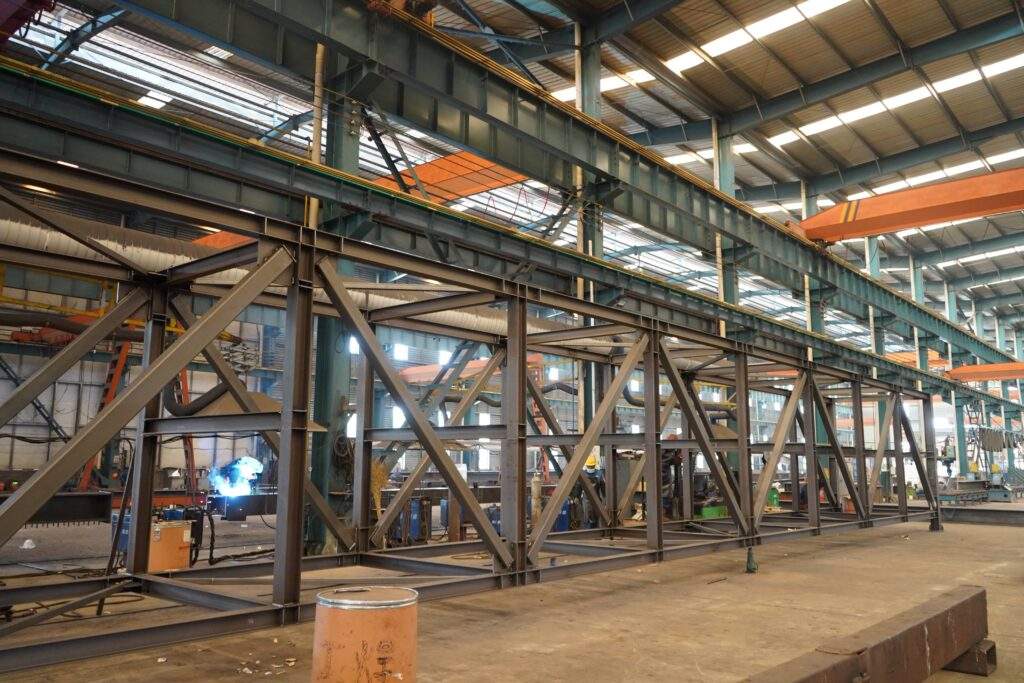

Understanding the density of structural steel is vital in the design and planning stages of any construction project. Here’s why:
1. Weight Calculations:
By knowing the density, engineers can calculate the weight of steel structures. This helps in designing the structural components to ensure that they are capable of bearing loads without being too heavy to support the structure itself.
2. Load Distribution:
The density of steel influences how it will distribute weight across different parts of the structure. A uniform density ensures even load distribution, which is critical for the stability and safety of the building.
3. Material Efficiency:
By understanding the density of structural steel, engineers can optimize the use of material in construction, minimizing waste while ensuring that the structure is strong and durable.
Conclusion
The density of structural steel plays a crucial role in its application in construction. It helps engineers and architects calculate the weight, strength, and stability of steel structures. With a typical density of around 7,850 kg/m³, structural steel is known for being strong and versatile, making it ideal for a wide range of applications, from buildings and bridges to industrial machinery and transportation systems.
By understanding the factors that influence the density of structural steel and knowing how to calculate it, professionals can make better decisions about material selection and design, ensuring that the final structure is both safe and cost-effective.
FAQ
1. What is the average density of structural steel?
The average density of structural steel is typically around 7,850 kg/m³ (7.85 g/cm³).
2. Does the density of structural steel change with temperature?
Yes, the density of structural steel can change slightly with temperature, but the change is generally minimal under normal conditions.
3. Why is the density of structural steel important in construction?
The density of structural steel is important because it helps engineers calculate the weight, strength, and load-bearing capabilities of steel components used in construction.