Steel structure welding is easy to underestimate during procurement. Drawings may look complete, the steel grade may be specified, and the fabrication schedule may appear realistic, yet the finished structure still depends on how joints are prepared, welded, inspected, documented, protected, and handled. A sound review process helps buyers identify gaps before they become workshop delays or site repairs.
This guide presents a practical steel structure welding checklist for procurement managers, project managers, engineers, and quality teams. It does not replace the project specification or the engineer’s approval. Instead, it shows what to ask, what evidence to request, and how to keep design, fabrication, inspection, and delivery aligned.
目录
What Steel Structure Welding Must Achieve
Good steel structure welding is not simply a neat-looking bead. The completed joint must match the design intent, use compatible materials, follow an approved procedure, and satisfy the acceptance requirements stated in the contract. It must also remain traceable to the people, procedures, consumables, inspections, and repairs involved in producing it.
The governing requirements for steel structure welding depend on the project, location, structural system, loading, and contract documents. For projects that reference American practice, the current AWS D1.1 Structural Welding Code—Steel addresses areas such as procedure qualification, welder qualification, fabrication, inspection, and acceptance. Other projects may use different national or international standards. The correct basis must be identified before work begins.
Start With the Contract Documents
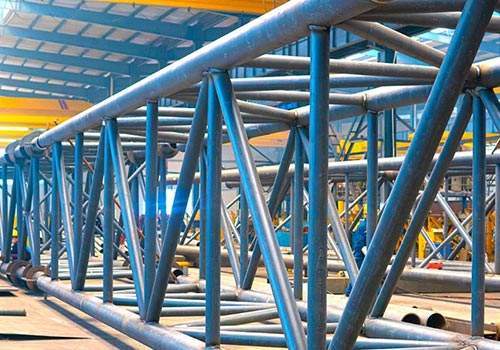
A steel structure welding review should begin with documents, not with a finished component. The fabricator needs the latest approved drawings, weld symbols, connection details, material specifications, applicable code edition, inspection plan, and any project-specific requirements. If these documents conflict, production should not rely on assumptions.
Buyers should confirm who has authority to answer steel structure welding questions and approve deviations. That may be the engineer of record, the client’s representative, or another role defined by the contract. A clear request-for-information process prevents informal workshop decisions from becoming undocumented design changes.
- Approved-for-fabrication drawings and revision register
- Applicable welding code and edition
- Weld map or clear weld identification system
- Inspection and test plan with hold or witness points
- Procedure and personnel qualification requirements
- Repair, concession, and nonconformance workflow
- Coating requirements for welded areas
For a broader view of how these documents fit into production, see our guide to industrial steel structure fabrication.
Confirm Materials and Welding Consumables
Steel structure welding starts with positive material identification and controlled storage. Base materials should be traceable to the purchase specification and supporting certificates required by the contract. The workshop should also prevent unidentified offcuts from returning to production without a reliable identification method.
Steel structure welding consumables must suit the approved procedure and the materials being joined. Storage, issue, exposure, and reconditioning controls should follow the consumable manufacturer’s instructions and the applicable project requirements. Damaged packaging, unclear batch identification, or uncontrolled exposure should trigger a review rather than an improvised decision.
The exact steel grade matters to steel structure welding because chemical composition, thickness, restraint, heat input, and service conditions can influence weldability. Buyers comparing shapes and grades can review this overview of structural steel types for construction before finalizing a fabrication package.
Review Procedures and Welder Qualifications
In steel structure welding, a Welding Procedure Specification, commonly called a WPS, gives the welder the essential instructions for making a particular weld. Depending on the governing standard, it may be supported by qualification records or permitted as a prequalified procedure. The steel structure welding package should show that each joint is covered by an appropriate, approved procedure.
Steel structure welding qualifications are equally specific. A qualification is not a general license for every process, position, material, thickness, or joint configuration. The quality team should compare each welder’s qualification range with the actual work assigned. Expiry, continuity, identification, and subcontractor status also need to be controlled according to the project rules.
"(《世界人权宣言》) AISC engineering FAQs on welding explain how structural steel specifications and welding requirements interact and include practical sections on groove welds, fillet welds, repairs, procedures, and inspection. They are useful background, but the project documents remain the controlling basis.

Control Joint Preparation and Fit-Up
Many steel structure welding problems begin before the arc is struck. Joint geometry, root condition, alignment, cleanliness, access, tack welds, temporary attachments, and restraint all affect how the weld can be made. Inspection at fit-up is therefore more useful than discovering a dimensional or access problem after the joint is complete.
The workshop should verify that parts match the drawing and that cutting or preparation has not introduced unacceptable damage. Moisture, oil, paint, scale, or contaminants within the area controlled by the procedure should be removed as required. Tack welds that remain in the joint need the same level of control expected by the applicable procedure and specification.
Distortion planning also belongs in the steel structure welding review. Balanced welding sequences, suitable restraint, presetting where approved, and realistic assembly tolerances can reduce correction work. For built-up members, review how web and flange alignment will be maintained throughout fabrication. Our H beam product page provides a related component reference.
Manage Workshop Welding Conditions
Consistent steel structure welding requires controlled working conditions. The team should monitor the variables identified by the WPS rather than relying on habit. These may include process, polarity, consumable classification, preheat, interpass control, position, travel technique, and other essential variables defined by the governing standard.
Weather and environment matter to steel structure welding as well. Wind can disturb shielding gas, rain can contaminate surfaces, and poor access can force an unsuitable welding position. Site work needs protection and planning that may not be necessary inside a workshop. Lighting and safe access must allow both the welder and inspector to see the joint clearly.
Safety is a separate, mandatory workstream. The OSHA welding, cutting, and brazing overview summarizes relevant hazards and links to standards and control guidance. Local law and the project safety plan may impose different or additional requirements, so the responsible safety professionals should define the applicable controls.
Plan Inspection Before Fabrication Starts
Inspection should be designed into steel structure welding, not added at the end. The inspection and test plan should identify what is checked before, during, and after welding; who performs each check; what records are produced; and where client or third-party involvement is required.
Visual inspection is fundamental to steel structure welding because it can assess joint preparation, workmanship, dimensions, surface condition, and visible discontinuities. Other examination methods may be required for selected joints, but their use and acceptance criteria must come from the design documents and applicable standard. More testing is not automatically better if the method, timing, coverage, and acceptance basis are poorly defined.
For broader quality-system planning, ISO 3834-1:2021 outlines criteria for selecting an appropriate level of quality requirements for fusion welding of metallic materials. It applies to manufacturing in workshops and at field installation sites. Whether it is contractually required or simply used as a planning reference should be made explicit.
Recognize Common Weld Problems
Buyers do not need to diagnose every discontinuity themselves, but they should understand how the steel structure welding quality system responds when something is wrong. Common concerns include cracking, incomplete fusion, porosity, undercut, overlap, poor profile, incorrect size, arc strikes, and distortion. The applicable code determines whether a condition is acceptable and what evaluation is required.
A steel structure welding repair should never disappear into the production process without a record. The team should identify the affected joint, evaluate the cause, approve the repair method where required, perform the repair with qualified personnel, repeat the required inspection, and close the nonconformance. Repeated defects should trigger corrective action rather than repeated local repairs.
The most useful buyer question is not “Do you ever have weld defects?” Every serious fabrication operation must be able to manage nonconforming work. A better question is: “How do you identify, control, repair, reinspect, record, and prevent recurrence?”
Workshop Welding vs Site Welding
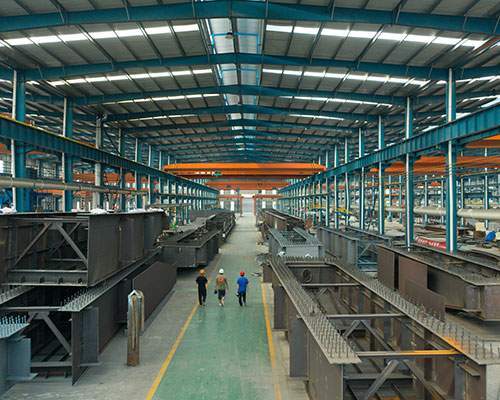
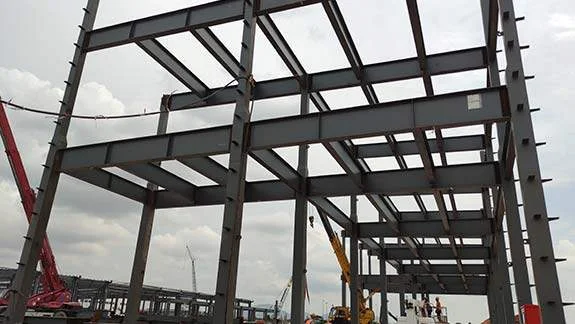
The location of steel structure welding changes the risk profile. Workshop welding generally offers better access to equipment, handling systems, controlled storage, stable work positions, and inspection resources. Site welding may be necessary for particular connections or repairs, but it requires closer coordination with erection, weather protection, access, temporary stability, and site safety.
| 评论区 | Workshop Welding | Site Welding |
|---|---|---|
| 环境 | More controlled and repeatable | Weather and wind protection may be required |
| Positioning | Members can often be rotated or supported | Joint position may be fixed by erection sequence |
| Material handling | Dedicated cranes, fixtures, and storage are available | Access depends on site logistics and lifting plans |
| Inspection access | Easier to schedule before coating and dispatch | Must be coordinated with erection and follow-on work |
| 可追溯性 | Usually integrated with shop travelers and stations | Needs disciplined field records and joint identification |
The goal is not to prohibit field work. It is to decide deliberately which steel structure welding joints should be completed in the factory and which must be made on site, then provide an appropriate procedure and inspection plan for each.
Keep Records Traceable
Traceability turns steel structure welding from a verbal assurance into a reviewable process. The required record set varies by contract, but it should allow the quality team to connect important joints with the drawing revision, material identity, WPS, welder, inspection result, and any repair history.
- Approved welding procedures and supporting qualification records
- Welder qualification and continuity records
- Material and consumable certificates required by the contract
- Fit-up, visual, dimensional, and specified examination reports
- Weld maps, joint numbers, or another traceable identification method
- Nonconformance, repair, reinspection, and closeout records
- Calibration records for relevant inspection and welding equipment
- Final manufacturing record book or turnover dossier, when required
Agree on the steel structure welding record format before fabrication. If the buyer waits until dispatch to request a detailed dossier, information may need to be reconstructed from multiple systems. That wastes time and can leave avoidable gaps.
A Buyer’s Pre-Fabrication Checklist
Use the following steel structure welding checklist during supplier clarification or the pre-production meeting:
- Confirm the governing code, edition, project specification, and drawing revision.
- Identify who can approve technical deviations and repairs.
- Review material traceability and consumable control.
- Map every joint type to an approved welding procedure.
- Check that welder qualifications cover the assigned work.
- Agree on fit-up, in-process, final, and dimensional inspection points.
- Define any required nondestructive examination, coverage, method, and acceptance basis.
- Review environmental controls for workshop and site welding.
- Approve the nonconformance and repair workflow.
- Define the final documentation package and submission schedule.
- Connect fabrication release to coating, packing, shipping, and erection priorities.
This steel structure welding review should be part of the wider supplier evaluation. Our guide on choosing a steel structure supplier covers engineering support, material control, fabrication capability, delivery coordination, and other procurement questions.
常见问题
What documents should a buyer request before steel structure welding starts?
For steel structure welding, request the approved drawings, applicable code and project specification, welding procedures, relevant personnel qualifications, material controls, inspection plan, and repair workflow. The exact list should match the contract and the risk of the joints involved.
Is visual inspection enough for every structural weld?
No single answer applies to every steel structure welding joint. Visual inspection is fundamental, while additional examination may be specified according to joint type, loading, design, code, and contract requirements. The engineer and project documents should define the required method, extent, timing, and acceptance criteria.
Why does fit-up matter to steel structure welding quality?
Fit-up controls alignment, access, joint geometry, root condition, and restraint. Poor preparation can make it difficult to follow the approved procedure and can increase distortion or repair risk. Checking fit-up before welding is usually more efficient than correcting a finished joint.
Should all structural welding be completed in a workshop?
Workshop production is often easier to control, but some project connections or repairs may require field welding. The project team should decide deliberately, provide approved procedures for each location, and account for access, weather, temporary stability, inspection, and safety.
How can a buyer verify welding quality without managing the workshop?
Set clear steel structure welding requirements, review the fabricator’s quality plan, agree on hold or witness points, require traceable records, and use qualified inspection personnel where the project calls for them. Focus on objective evidence rather than photographs of finished welds alone.
Build Quality Into the Project Before Welding Begins
Reliable steel structure welding is the result of coordinated decisions made before, during, and after fabrication. Clear drawings, suitable procedures, qualified personnel, controlled materials, planned inspection, and traceable records work together. If one part is missing, final inspection may reveal a problem but cannot recover all the time already lost.
Before requesting a fabrication proposal, prepare the latest drawings, project location, applicable standards, member schedule, coating requirements, inspection expectations, delivery sequence, and required documentation. Then discuss the package with a supplier that can explain how engineering, production, quality control, packing, and delivery will be coordinated.
To review your project requirements with the Guanglei team, 联系我们 and share the available drawings, specifications, destination, schedule, and inspection needs. A complete technical brief makes the discussion more efficient and helps both parties identify open questions before production begins.