A steel structure building is more than a fast construction option. For factories, warehouses, logistics centers, agricultural facilities, and commercial industrial projects, it can become a flexible long-term asset that supports production, storage, expansion, and daily operations. The value of a steel building does not come only from the material itself. It comes from how the structure is planned, fabricated, transported, installed, protected, and maintained.
Many project owners begin by asking for a building size or a quotation. However, the better starting point is understanding how the building will be used. A steel structure building should match the site conditions, workflow, roof and wall requirements, equipment loads, local climate, installation resources, and future growth plan. This guide explains the key decisions buyers should make before starting a steel building project.
目录
Why Steel Structure Buildings Are Popular for Industrial Projects
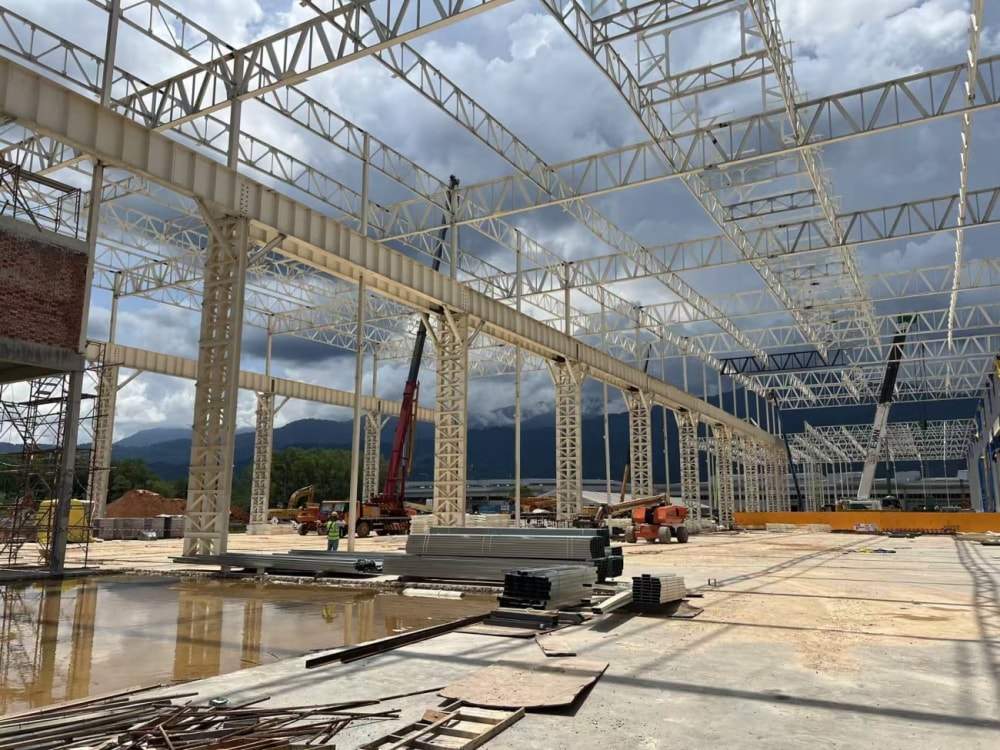
A steel structure building is widely used because it combines strength, flexibility, and speed of construction. The main load-bearing system usually includes steel columns, steel beams, roof trusses, purlins, bracing, bolts, roof panels, and wall panels. These components can be fabricated in a factory and assembled on site, which helps improve project control and reduce uncertainty during construction.
For industrial buyers, the most practical advantages are open interior space, flexible layouts, predictable fabrication, and easier expansion. A steel frame can support wide spans, which helps reduce the number of internal columns. This is important for production lines, vehicle movement, loading areas, storage racks, and equipment installation.
A steel building can be used for many applications, including:
| 应用 | Common Building Requirement |
|---|---|
| 仓库 | Large span, high clear height, efficient loading access |
| 生产车间 | Equipment layout, ventilation, crane planning, safe workflow |
| Factory | Strong frame system, process zoning, expansion flexibility |
| Logistics center | Wide doors, truck access, storage efficiency |
| 农业建筑 | Ventilation, corrosion protection, simple maintenance |
| Cold storage | Insulated wall and roof panels, air sealing |
| Commercial industrial facility | Clean appearance, durable enclosure, flexible interior |
Guanglei Steel Structure provides steel structure products for various construction needs and presents its product categories, including steel columns, steel beams, maintenance sections, and related building components, on its official product pages.
Start With the Building Function Before Choosing the Frame
The first step is not choosing a beam size. It is defining the function of the building. Two buildings with the same length and width may require very different structural systems if their internal operations are different.
A storage warehouse may need clear height and rack efficiency. A production workshop may need crane support and ventilation. A logistics building may need loading docks and smooth vehicle circulation. A cold storage building may need insulated panels and careful air sealing. A heavy industrial building may need stronger columns, roof loads, and foundation coordination.
Before starting the design, buyers should prepare answers to these questions:
| 规划问题 | 为何重要 |
| What will the building be used for? | Determines layout, loads, panels, doors, and equipment zones |
| What machines or vehicles will operate inside? | Affects floor space, column grid, height, and safety planning |
| Will overhead cranes be installed? | Impacts column design, crane beams, bracing, and foundation |
| What materials will be stored or processed? | Affects ventilation, fire planning, humidity control, and corrosion protection |
| Is future expansion likely? | 影响因素决定了框架的方向和预留的连接点 |
| What are the local wind, rain, and seismic conditions? | Impacts structural calculation and enclosure details |
| Are workers inside for long periods? | Affects daylighting, ventilation, insulation, and comfort |
A steel structure building should be designed around real operational needs, not only around the outside dimensions.
Main Components of a Steel Structure Building
A successful steel building works as a complete system. Each component has a role, and poor coordination between components can cause installation problems, leakage, deformation, or inefficient use of space.
| 组件 | 主要功能 | Key Design Consideration |
| 钢柱 | 将竖向荷载传递至地基 | Load capacity, spacing, anchorage |
| 钢梁 | 承受屋顶和框架荷载 | Span, bending resistance, connection design |
| 桁架梁 | Support large-span roofs | Interior openness, roof load, installation method |
| 支撑系统 | 提高横向稳定性 | Wind resistance and frame alignment |
| 檩条和横梁 | 支撑屋顶和墙板 | Panel fixing and load transfer |
| Roof panels | Protect the building from weather | Drainage, insulation, wind uplift resistance |
| Wall panels | Enclose and protect the interior | Weather resistance, thermal performance, appearance |
| 螺栓和连接件 | Join steel members | Installation accuracy and structural safety |
| 涂层系统 | 保护钢材免受腐蚀 | Environment, service life, maintenance plan |
For buyers comparing structural options, 横梁 is often used for primary structural members because it provides strong load-bearing performance and practical fabrication efficiency. For wider spans or special roof systems, 桁架梁 may help create more open interior space.
选择合适的结构体系
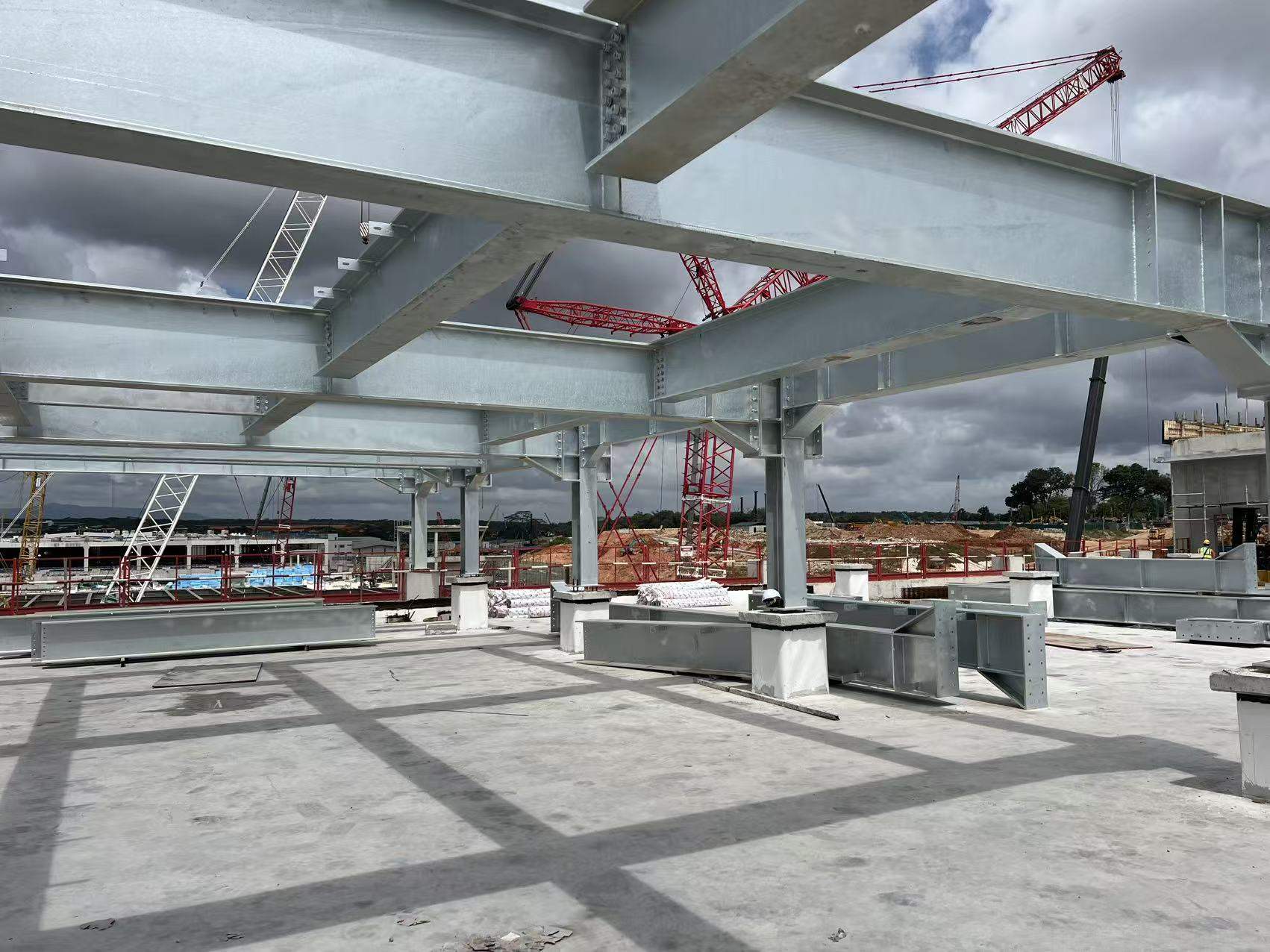
The structural system affects cost efficiency, construction speed, usable space, and long-term performance. A standard steel structure building may use a portal frame system, while larger or heavier buildings may require truss systems, box columns, lattice columns, or special structural members.
| 结构系统 | Suitable Project Type | 主要优势 |
| 门户框架 | Warehouse, workshop, factory, storage building | Efficient, fast installation, open space |
| H型钢框架 | Industrial building with stronger load needs | Stable performance and practical fabrication |
| Truss structure | Large-span building or roof-heavy project | Reduces internal columns and supports wider space |
| Multi-bay steel frame | Large production facility | Separates production zones while keeping structural continuity |
| Box column system | Heavy-duty or high-load buildings | Strong stiffness and load-bearing capacity |
| Lattice column system | Certain large-span or heavy industrial projects | Can improve bending resistance while optimizing steel use |
The right structure depends on actual loads and building use. A project with overhead cranes, heavy equipment, high wind exposure, or long spans should not be treated like a simple storage shed. Engineering review should be done before fabrication begins.
"(《世界人权宣言》) AISC 钢结构建筑规范 provides generally applicable requirements for the design and construction of structural steel buildings and other structures, making it a useful technical reference for understanding structural steel design discipline.
Span, Height, and Column Grid Decide Daily Efficiency
A steel structure building may look simple from the outside, but its internal efficiency depends heavily on span, height, and column grid.
Span determines how open the building is. A wider span can improve forklift movement, storage layout, and production flexibility. However, larger spans require careful structural design and may need stronger beams or truss systems.
Height determines storage capacity, ventilation volume, equipment clearance, and crane operation. A building that is too low may limit future machinery or racking systems. A building that is unnecessarily high may increase wind load and enclosure requirements.
Column grid determines how people, machines, materials, and vehicles move inside the building. Poor column placement can block traffic routes, interrupt production lines, and reduce usable floor area.
| Design Decision | 实际影响 |
| Building span | Controls open space and interior flexibility |
| 净高 | Affects racking, equipment, cranes, and ventilation |
| 列间距 | Influences workflow and storage efficiency |
| 海湾布局 | Helps divide production, loading, and storage zones |
| 扩展方向 | Determines whether future growth is easy or difficult |
| Door placement | Affects logistics flow and safety |
| 屋顶坡度 | Impacts drainage and waterproofing performance |
A good steel building design should compare several layout options before finalizing the frame. The goal is not only structural strength but also smoother daily operation.
Roof and Wall Systems Should Match the Environment
The enclosure system is often underestimated. Roof and wall panels affect waterproofing, insulation, interior temperature, appearance, noise control, and maintenance. A building in a hot and rainy climate has different enclosure needs from a building in a dry inland area. A cold storage building requires different wall performance from a simple equipment shed.
常见的机箱选项包括:
| 外壳选项 | 适用范围 | 主要优势 |
| 单色钢板 | 基础工业仓储 | Lightweight and fast installation |
| 彩钢夹芯板 | Insulated warehouse, workshop, modular building | Better thermal and sound insulation |
| 岩棉夹芯板 | Buildings with higher fire-resistance needs | Good fire and acoustic performance |
| 聚氨酯夹芯板 | Cold storage or temperature-sensitive buildings | 出色的隔热性能 |
| PC 阳光板 | Daylighting wall or roof areas | Improves natural light |
| Color steel edging | Panel joints and edge finishing | Improves sealing and appearance |
For projects that need insulation, clean appearance, and faster installation, 彩钢夹芯板 can be used for industrial buildings, warehouses, workshops, cold storage, and modular construction applications. Guanglei’s product page describes these panels as building materials used for insulation, strength, and fast installation.
Wind, Rain, Seismic Conditions, and Local Codes Matter
A steel structure building must be designed for its actual location. Wind load, seismic requirements, rainfall, humidity, temperature changes, snow load, and soil conditions can all affect the final design.
In coastal or humid regions, corrosion protection is especially important. In high-rainfall regions, roof drainage, gutter design, downpipe position, and panel overlap must be planned carefully. In areas with strong wind, roof uplift resistance, bracing, anchor bolts, and wall panel fixing must be reviewed in detail.
A reliable design review should include:
| Review Item | What to Confirm |
| 风荷载 | Local wind speed, building height, roof shape |
| Seismic load | Regional seismic requirements and structural stability |
| 屋顶荷载 | Rain, maintenance access, insulation, equipment, possible snow |
| 基金会 | Soil bearing capacity, anchor bolt layout, base plates |
| Drainage | Roof slope, gutter capacity, downpipes |
| Corrosion exposure | Coating system and maintenance plan |
| 消防安全 | Material selection, escape routes, local requirements |
| Installation safety | Lifting sequence, temporary bracing, access control |
"(《世界人权宣言》) 美国职业安全与健康管理局(OSHA)钢结构安装标准 states that steel erection requirements are intended to protect workers from hazards associated with steel erection activities. This reinforces the importance of planning not only the final structure but also the installation process.
Fabrication Quality Determines On-Site Assembly Efficiency
A steel structure building is only as accurate as its fabrication process. Even strong steel members can cause problems if cutting, drilling, welding, coating, or labeling is inaccurate. Factory quality control is especially important for export projects because correction work on site can be difficult and time-consuming.
Key fabrication steps include:
| 制造步骤 | 为何重要 |
| 材料检验 | 确认钢材等级和规格 |
| 切割与钻孔 | Helps members fit correctly during assembly |
| 焊接控制 | Protects joint strength and consistency |
| 表面处理 | 提高涂层的附着力和耐腐蚀性 |
| 必要时进行试装 | 降低不匹配风险 |
| 元器件标记 | Helps installers identify each part quickly |
| Packaging | Protects steel during transport |
| Loading plan | Reduces damage and improves unloading efficiency |
Guanglei’s website states that the company integrates design, production, and installation, and its product pages show steel structure components and enclosure products used in industrial building projects.
Installation Planning Should Begin Before Delivery

Installation is not just the final step. It should be planned before fabrication and shipping. A good installation plan reduces delays, improves safety, and helps avoid damage to materials.
Before steel components arrive, the project team should confirm foundation readiness, anchor bolt accuracy, crane access, unloading area, temporary storage space, weather conditions, installation sequence, and safety management.
| Installation Factor | 为何重要 |
| Foundation accuracy | Prevents column alignment problems |
| Anchor bolt position | Affects base plate installation |
| 起重机通行 | Ensures safe lifting of beams and columns |
| 物料存放区 | 让组件井然有序且得到妥善保护 |
| 临时支撑 | Maintains frame stability during erection |
| 天气规划 | Reduces lifting risk during strong wind or rain |
| 面板安装顺序 | Improves roof and wall waterproofing |
| 最终检查 | 确认螺栓、面板、排水沟、门和密封件 |
Steel erection is one of the most safety-sensitive stages of construction. OSHA’s steel erection topic page identifies steel erection work as a hazardous construction activity and provides standards and resources related to steel erection safety.
Corrosion Protection Is a Long-Term Investment
Corrosion protection is critical for steel structure buildings, especially in humid, coastal, agricultural, or industrial environments. The coating system should match the building’s exposure level and expected service life.
Common anti-corrosion considerations include surface preparation, primer selection, paint thickness, galvanized components, edge protection, bolt protection, and maintenance inspection. If the building will be used for chemical storage, animal farming, coastal logistics, or high-humidity production, corrosion planning should be reviewed even more carefully.
| Environment | Recommended Focus |
| Coastal area | 更强的防腐涂层和定期检查 |
| 强降雨 | Roof drainage, panel sealing, gutter maintenance |
| 化学物质接触 | 特殊涂层与通风设计 |
| Agricultural use | Moisture control and corrosion-resistant details |
| Industrial dust | Easy-clean surfaces and accessible inspection points |
| High temperature | Ventilation and suitable panel selection |
A well-protected steel structure building can reduce future maintenance pressure and preserve structural performance over time.
Sustainability and Lifecycle Thinking
Sustainability is becoming more important in industrial construction. For steel structure buildings, lifecycle value includes durability, efficient material use, repairability, reuse potential, and recyclability. Buyers should not evaluate a building only by initial construction convenience. They should also consider how the building will perform, adapt, and be maintained over its service life.
"(《世界人权宣言》) 世界钢铁协会 discusses steel’s role in the circular economy, including durability, reuse, remanufacturing, and recycling. This makes steel an important material for projects where long-term resource efficiency matters.
For buyers, lifecycle thinking means asking practical questions:
| Lifecycle Question | 为何重要 |
| Can the building be expanded later? | Reduces future reconstruction work |
| Can damaged panels be replaced easily? | Simplifies maintenance |
| Is the coating suitable for the environment? | Extends service life |
| Is the layout flexible for future production changes? | Improves long-term usability |
| Are components marked and documented? | Supports maintenance and modification |
| Is the design efficient without unnecessary material waste? | Improves project value |
A steel building should be planned as a long-term working asset, not a short-term shell.
买家应避免的常见错误
Many steel structure building problems begin before construction starts. They often come from incomplete project information, unclear drawings, poor communication, or choosing a supplier without reviewing technical capability.
| 错误 | 可能的结果 |
| Choosing only by low quotation | Weak design, poor coating, missing details |
| Not confirming building use | Layout does not match real operations |
| Ignoring wind and rain conditions | Leakage, vibration, or stability concerns |
| Poor column grid planning | Reduced usable space |
| 没有未来的扩张计划 | Higher cost when business grows |
| Unclear panel requirements | Poor insulation or condensation problems |
| Weak packaging plan | Transport damage and missing parts |
| No installation sequence | Site delays and safety risks |
| No drawing review | Fabrication or assembly errors |
A better approach is to prepare project information clearly and discuss it with a technical steel structure supplier before confirming the design.
What Information Should You Prepare Before Inquiry?

A good inquiry helps the supplier provide better technical suggestions. Instead of sending only a building size, buyers should prepare the project conditions and expected usage.
Useful information includes:
| Inquiry Information | Example Details |
| 建筑用途 | Warehouse, workshop, factory, logistics center, agricultural building |
| 地点 | Country, city, site conditions, climate |
| 建筑规模 | Length, width, clear height |
| Span requirement | Clear span or acceptable column positions |
| Roof and wall system | Single sheet, sandwich panel, insulation needs |
| 门窗布局 | Rolling doors, sliding doors, windows, louvers |
| 起重机要求 | Capacity, lifting height, working range |
| 载荷条件 | Equipment, storage racks, roof load |
| Corrosion environment | Coastal, humid, chemical, agricultural |
| 扩张计划 | Future length extension or side expansion |
| Drawings | Architectural layout, foundation plan, or reference sketch |
For project discussion, buyers can send building dimensions, usage, local conditions, drawings, and layout requirements through Guanglei’s contact page. Guanglei’s contact page lists phone, social channels, address information, and an inquiry form for project communication.
常见问题
什么是钢结构建筑?
A steel structure building is a building that uses steel columns, beams, trusses, bracing, purlins, roof panels, and wall panels as the main structural system. It is commonly used for warehouses, workshops, factories, logistics centers, and industrial buildings.
Why choose a steel structure building for industrial use?
Steel structure buildings are popular for industrial use because they support wide spans, flexible layouts, fast assembly, strong load-bearing performance, and easier future expansion when properly designed.
What affects the design of a steel structure building?
The main factors include building use, span, height, column spacing, wind load, seismic requirements, roof and wall panels, crane loads, equipment layout, corrosion exposure, and local building codes.
Can a steel structure building be expanded later?
Yes. A steel structure building can often be expanded later, but expansion should be considered during the original design. Frame direction, end-wall details, reserved connection points, and site layout should be planned early.
Which panels are suitable for steel structure buildings?
Single color steel sheets are often used for basic enclosure. Color steel sandwich panels are suitable when insulation, sound control, and better indoor comfort are required. The best choice depends on building use and environment.
How can I improve the service life of a steel building?
Choose suitable steel specifications, correct coating, reliable roof drainage, proper panel sealing, good ventilation, and regular inspection. Corrosion protection should match the building’s local environment.
What should I send to a steel structure supplier before quotation?
You should send building size, use, location, local climate, span requirement, clear height, door layout, roof and wall panel needs, crane requirements, drawings if available, and future expansion plans.
结论
A steel structure building can provide strong value for industrial and commercial projects, but only when it is planned as a complete system. The frame, span, height, column grid, roof and wall panels, corrosion protection, fabrication accuracy, installation plan, and future expansion strategy all affect the final result.
For buyers, the smartest approach is to begin with building function and site conditions, not only with size. A well-planned steel building can improve workflow, reduce construction uncertainty, support future growth, and deliver long-term operational value.
For steel columns, beams, truss beams, sandwich panels, and complete steel structure project support, you can explore Guanglei’s 钢结构产品 or submit your project details through the contact page.